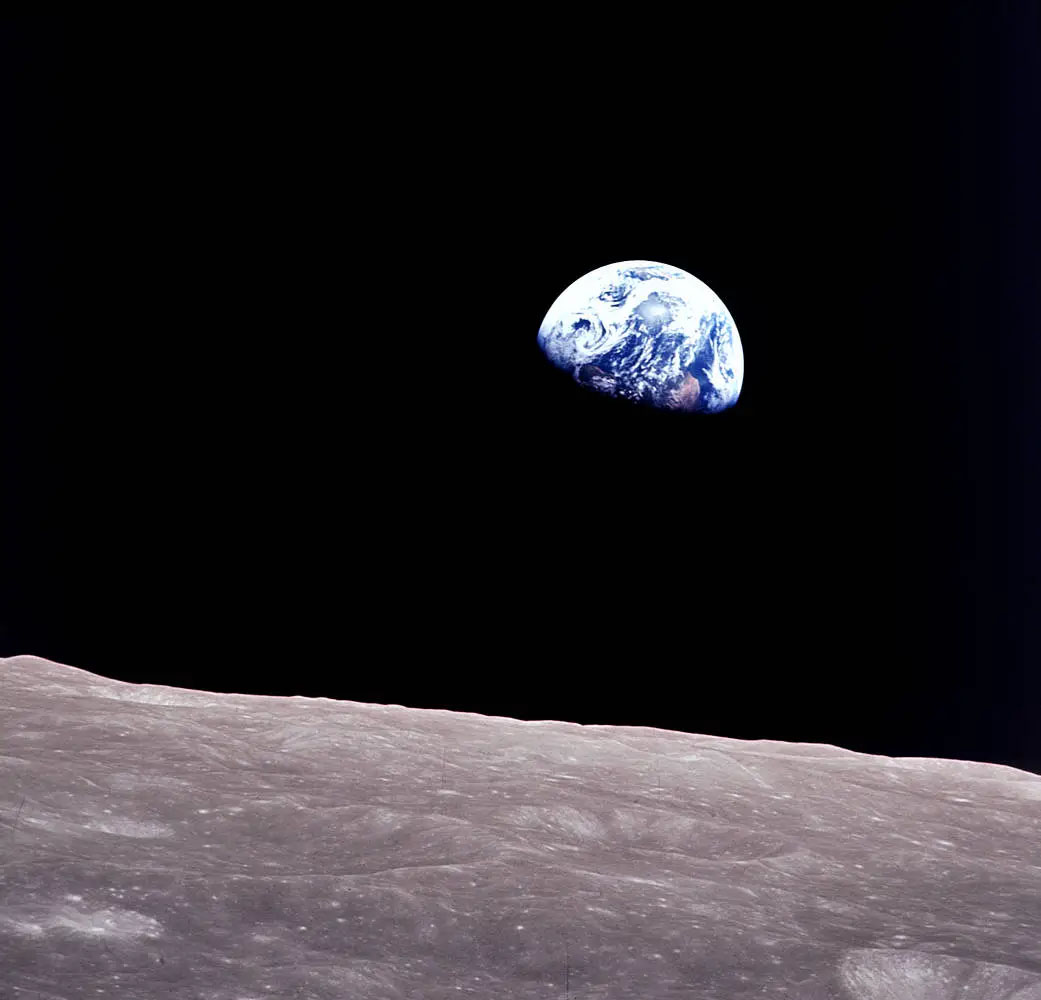
Astronauts aboard Artemis II will have the opportunity to recreate one of the most iconic space photographs of all time. But despite the wealth of camera technology on board, and despite the technological differences between 2026 and 1968, it probably won’t be easy to recreate the iconic “Earthrise” photo.
Orion is carrying 32 cameras on Artemis II’s historic flight around the far side of the moon before returning to Earth today, March 6, NASA said. By eliminating cameras on the spacecraft itself, the four astronauts on board now have 17 handheld photography devices at their disposal, including a Nikon D5 digital SLR camera, a Nikon Z9 mirrorless camera, a GoPro, and a smartphone.
The camera technology available to the Artemis II crew is very different from the Hasselblad film camera and 250mm lens that Lunar Module pilot Bill Anders used to capture the iconic Earthrise photo in 1968. Advances in camera technology make it seem more likely that the Artemis II pilot will capture Earthrise on camera in 2026, but while astronauts have the advantage of a camera, the logistics of the flight will make it difficult to recreate the photo. challenge.
Article continues below
When astronauts took the photo of Earthrise in 1968, it was taken at the moment the crew was orbiting the far side of the moon when Anders spotted Earth approaching. Anders had to change his camera because he was using black-and-white film, but he was able to capture the now-iconic image of the Earth “rising” from the moon’s surface.
But Apollo 8 orbited the moon 10 times. Orion orbits the far side of the moon only once, so Artemis II only has one chance to reproduce the image. If you count both “Earthrise” and “Earthset,” astronauts will have two opportunities to recreate a similar photo, one toward the beginning and one toward the end of their activity on the far side of the Moon.
The crew will only have a few minutes to photograph similar views of the Moon and Earth together, and the four-person crew must do so while working in microgravity, only about the size of two minivans.
Artemis II will also be farther from the moon than Apollo 8. Artemis II’s flight path is up to 100 times higher than the 60 miles above the lunar surface that resulted in the original image. Thankfully, astronauts are equipped with 80-400 mm telephoto lenses, and the original image was taken with a 250 mm telephoto lens, so it may be possible to cover some of this distance. The differences between medium format film cameras and full-frame D5 and Z9 cameras also help you crop the lens closer.
What is another important difference? As the Orion space capsule moves around the moon’s far side, it is likely that the moon’s far side is only partially illuminated, meaning that the moon’s surface in the reconstructed photo likely looks different than the brightly lit surface of the 1968 image.

Not only is the original Earthrise image iconic, showing Earth rising above the moon, it also helped unify a divided planet during the Vietnam War. The world watches Artemis II amid similar political tensions. Another iconic photo could serve as a visual reminder of a fragile Earth that transcends language barriers.


Regardless of whether Artemis II is able to capture similar shots, the crew has already sent back iconic images from the historic spaceflight. These include shots of Earth that showed both the Northern and Southern Lights at once, and some of the first smartphone space photography, as personal smartphones had just been approved for spaceflight.
you may also like
Check out the best cameras for astrophotography and the best lenses for astrophotography.
#Artemis #cameras #recreating #iconic #space #photo #easy