Japanese architect Kengo Kuma and his studio Kengo Kuma Architecture and Urban Design Office (KKAA) have announced Earth | Tree, a site-specific installation at Copenhagen Contemporary, was developed in collaboration with Danish wood manufacturer Dinesen. The project, which opened on March 28, 2026 as part of the institution’s CCreate programme, occupies a former industrial hall and introduces spatial interventions defined by wood, brick and light. Led by partner Yuki Ikeguchi and team members Asger T. Turnberg, Nicolas Guichard and Yasemin Scheiner, the installation marks KKAA’s first exhibition in Scandinavia and situates the studio’s material-oriented practice within an exhibition format.
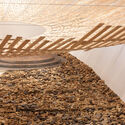
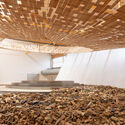
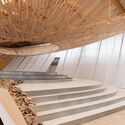
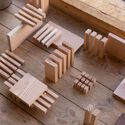
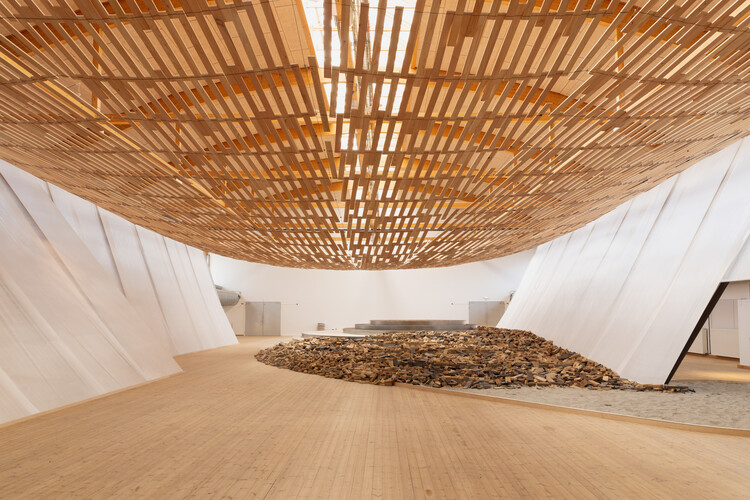
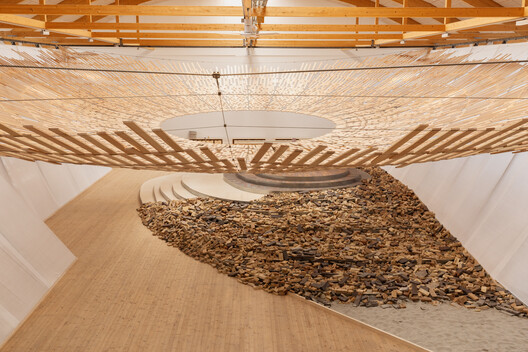
At the center of the installation, a suspended structure comprised of handcrafted Douglas fir elements defines the spatial experience. This wood system filters natural light through a transparent assembly, creating an atmosphere that changes throughout the day. This effect references a Japanese concept. komorebidescribes how sunlight passes through the canopy of a tree, creating a pattern of light and shadow. The structure embodies Kuma’s continued exploration of architecture as a porous and responsive system, where materiality and light are treated as primary design drivers rather than secondary elements.
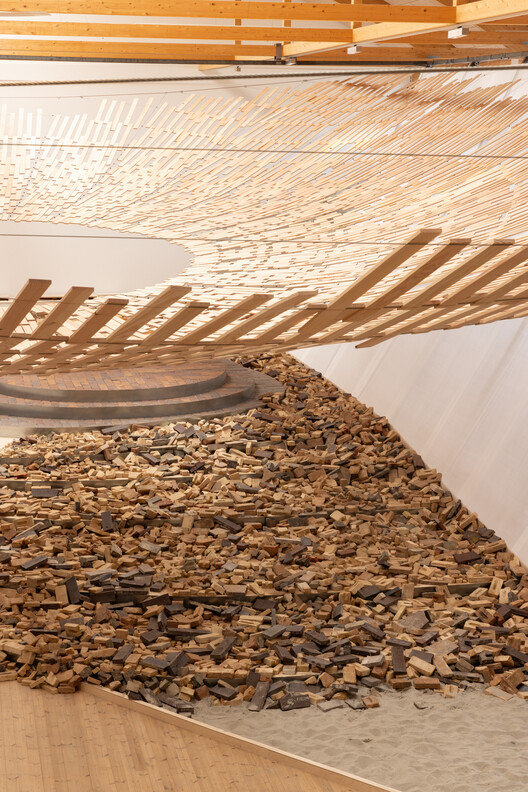
The project brings together contributions from several Danish manufacturers, including timber from Dinesen, brick from Petersen Tegl and lighting from Anker & Co. Rather than functioning as separate elements, these materials are assembled to establish a coherent spatial language. The combination of wood, brick and artificial light provides a coordinated contrast between surfaces, structure and lighting, while also referencing common concerns in Japanese and Scandinavian architectural traditions.
Related articles
Zaha Hadid’s Legacy and the Ron Museum at Büro Ole Scheeren: This Week’s Review
The installation also incorporates social aspects through its creation process. The wooden components were developed in collaboration with Troldcare School, and students with special needs participated in the production of the elements. This commitment aligns with the project’s broader focus on responsible materials use and knowledge sharing, which reflects both KKAA and Dinesen’s approach to sustainable practices. The use of carefully sourced wood and a strategy of material efficiency further emphasizes the project’s focus on longevity and maximum utilization of resources.
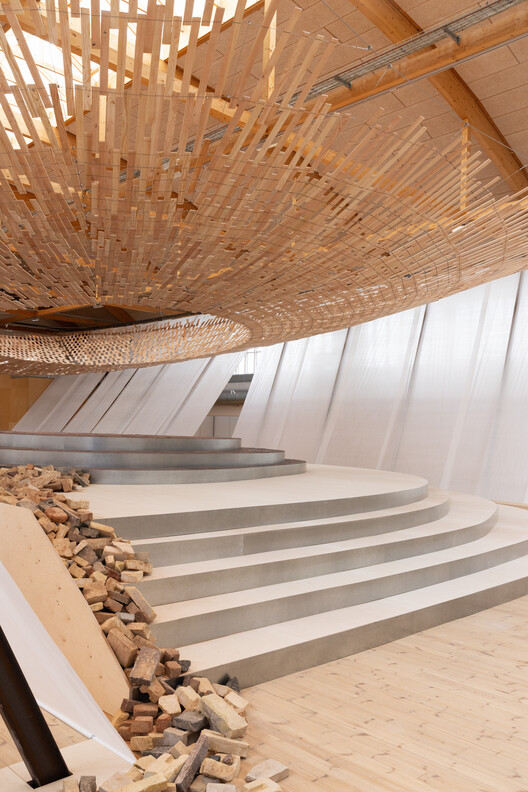
Through the Earth | Tree, Kengo Kuma continues his long-standing investigation into the relationship between architecture and nature, translated here into the context of an exhibition. This installation emphasizes the temporal nature of space, where the atmosphere of the space changes continuously through changing light conditions. Based on the earthy tones of Petersen Tegl’s brick surfaces, expressed by the overhead timber structure, the project forms a layered composition that can be read as an exploration of atmosphere rather than a fixed architecture.
In a related development, the Venice Biennale unveiled its renovated central pavilion in the Giardini following a comprehensive intervention completed in March 2026. The updated building will be used for the first time for Biennale Arte 2026, hosting “In Miner Keys”, curated by Koyo Koyo. In São Paulo, Eduardo Longo’s Casa Bora will be open to the public for the first time as part of the ABERTO5 exhibition, which will run until May 31, 2026, while Art Paris 2026 will return to the Grand Palais from April 9 to 12, occupying a 77,000 square meter landmark recently restored at the direction of Châtillon architects.
#Kengo #Kuma #Architects #Urban #Design #Office #presents #sitespecific #installation #Earth #Tree #Copenhagen #Contemporary