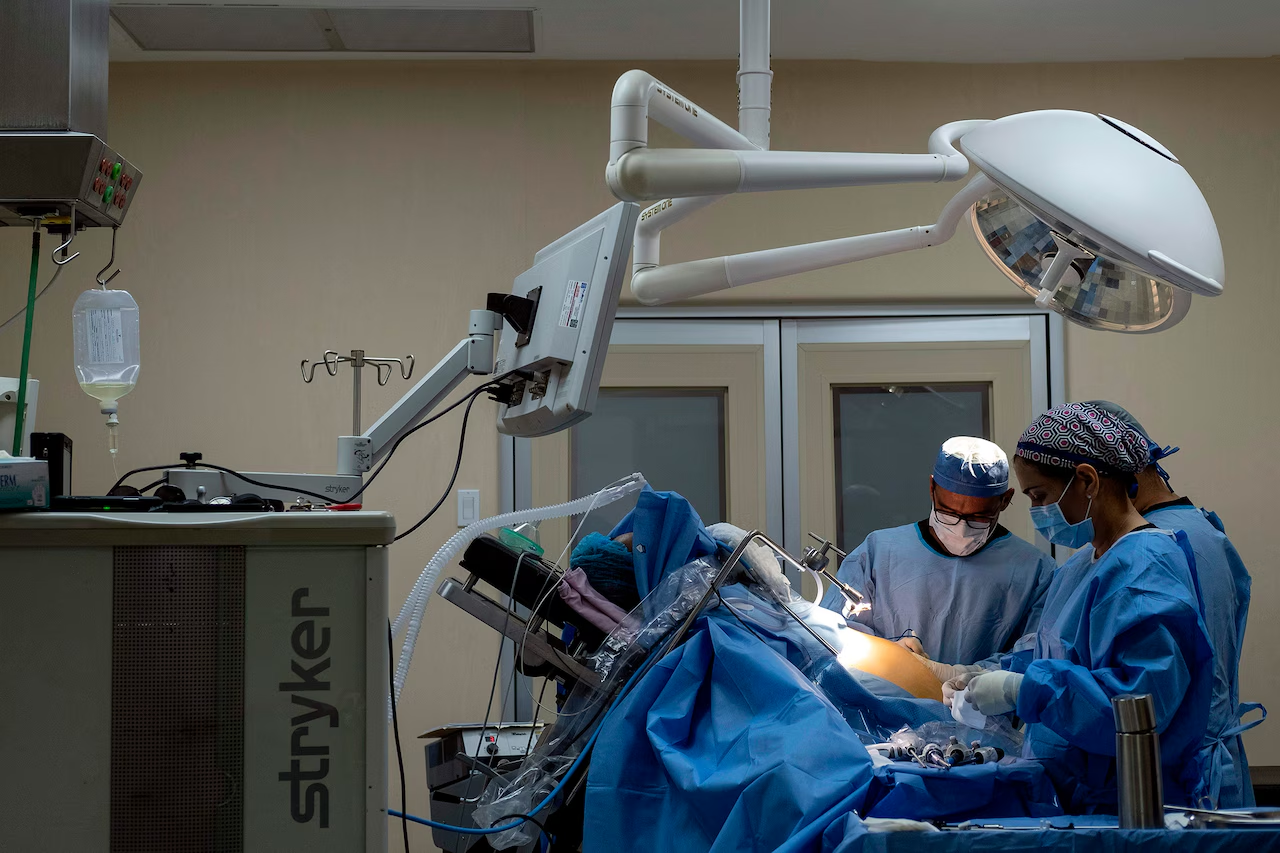
BEACHWOOD, Ohio — For years, Beckham roamed the hallways of University Hospital with a clear purpose. The goal was to help cancer patients and their families find their way physically and emotionally through the most difficult days of their lives.
What he didn’t expect was that one day that same hallway would take him on a journey that would save his own life.
Beckham’s account is part of cleveland.com and The Plain Dealer’s Healthcare Stories series, which highlights experiences submitted by readers across Northeast Ohio. Collectively, these stories reflect the compassion, skill, and heroism of our region’s healthcare community. To protect privacy, posters are identified by pseudonyms.
Beckham, 79, grew up in Cleveland, spent years away from the country for work, and returned for good 40 years ago. But his connection to University Hospitals runs deeper than geography.
For 11 years, he walked those halls with his wife undergoing treatment for ovarian cancer. After she passed away in 2009, he decided to give back. By 2016, he created a volunteer program to help patients navigate the vast UH system.
Ten years later, he’s about to reach his 19,000th patient.
“At my age, my family is pretty small,” he told cleveland.com. “My family now includes all the patients and families at the cancer center.”
Helping others has given Beckham a sense of purpose since his wife’s death, but that sense of normalcy was interrupted several years ago. During his rounds in 2022, he started feeling short of breath and called his cardiologist.
Dr. Barry Efron immediately ordered tests, which revealed a serious problem. Two of Beckham’s four major arteries were completely blocked, and the third was 70% narrowed.
“I was 76 years old and worried about my survival,” Beckham said of learning he would need open-heart surgery.
The risk seemed especially high given that his mother, father and grandmother died of heart failure.
He was referred to Dr. Alan Markowitz, a veteran surgeon at Ahuja Medical Center who was nearing retirement at the time. Beckham met him the day before the surgery, but that alone put him at ease.
Beckham said the team working on his case made him feel more like family than a patient from the start, expanding the community he has built within University Hospital. They guided him every step of the way, answered all his questions and gave him peace of mind.
Then the day of surgery arrived – Beckham had no idea when it started.
“I woke up and wondered when the surgery was going to start. I didn’t realize it was over,” he said. “Dr. Markowitz has a unique method of having the nursing staff and anesthesiologists put you to sleep while you’re talking in the middle of your sentence. When you wake up five hours later, the nurses tell you I’ve finished my sentence.”
That night, Beckham had already gotten out of bed and was sitting in a chair. The next day he got up and was walking. A nurse attended to him and helped him start walking, but eventually he began to set his own pace.
At one point, Dr. Markowitz spots them in the hallway and jokes, “I wonder who’s walking who?”
That moment stuck with Beckham. It was a casual exchange that relieved the tension that was hovering over the recovery process.
What was apparently a horrifying event in his life ended up being a happy memory. Beckham credits that to the team’s attention to detail.
Because he has diabetes, doctors carefully adjusted his medication to stabilize his condition. He also acknowledged that the nurses were integral to his recovery as well, and admitted with some humor that he may have driven some of them crazy.
“Nurses and people who do what they do are God’s gift to the planet,” he said. “They are here to do God’s work.”
The team did not rush Beckham’s treatment, but he was discharged from the hospital just four days after surgery.
Doctors initially told him not to drive for six weeks and not volunteer at a hospital for eight weeks. But two and a half weeks later, after seeing Dr. Markowitz, he was cleared to start working with cancer patients again.
“It was one of the easiest surgeries I’ve ever had in my life,” he said, comparing his recovery to the rotator cuff surgery he underwent years ago, which was much more difficult.
Beckham is now back to his normal routine. Four days a week at Seedman Cancer Center, he guides patients and families through the fragile moments he understands all too well.
Over the past decade, university hospitals have changed the definition of family, he says. In addition to the people he helped, the professionals who treated him in 2022 deepened his sense of belonging to the University Hospital community.
To the doctors and nurses who helped him when he was at his weakest, he had this message: “Thank you for giving me the rest of my life!”
If a healthcare worker at Cleveland Clinic, University Hospitals, or MetroHealth changed or saved your life, we encourage you to share your story here.
Together, Cleveland Clinic, University Hospitals and MetroHealth employ thousands of Northeast Ohioans and treat millions of patients each year. Your story will help shine a light on the people who made a difference in your life when you needed it most.
#family #University #Hospital #saved #life #Healthcare #Stories