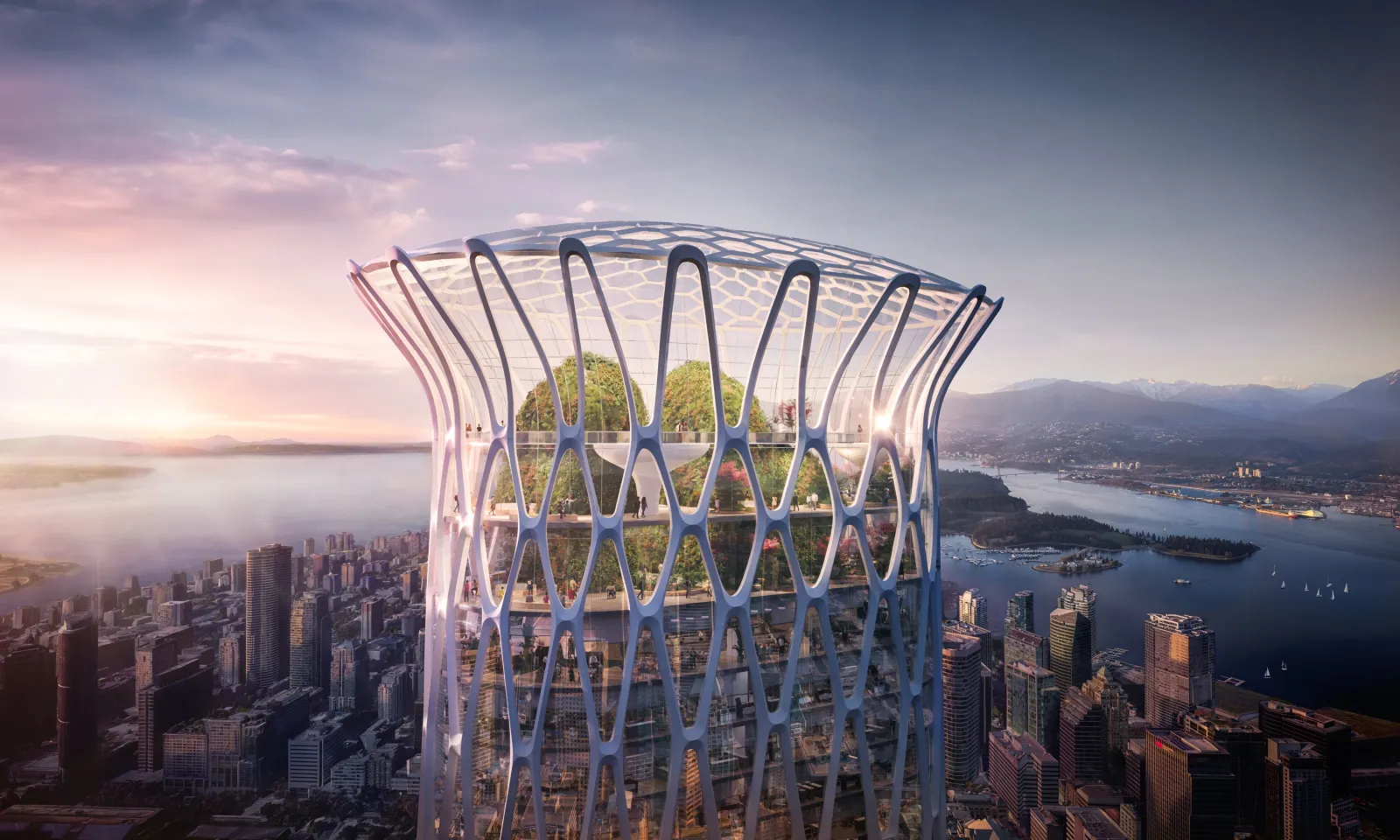
A new development proposed for Vancouver could soon reshape the city’s skyline with the first ever skyscraper to feature a “forest in the sky.”
According to the Tall Buildings and Urban Habitat Council, a skyscraper is defined as a building over 300 meters (984 feet) in height. The proposed project meets that criteria, with the tallest tower reaching 1,033 feet (315 meters) and would rank as a landmark not only in Vancouver but also in Canada.
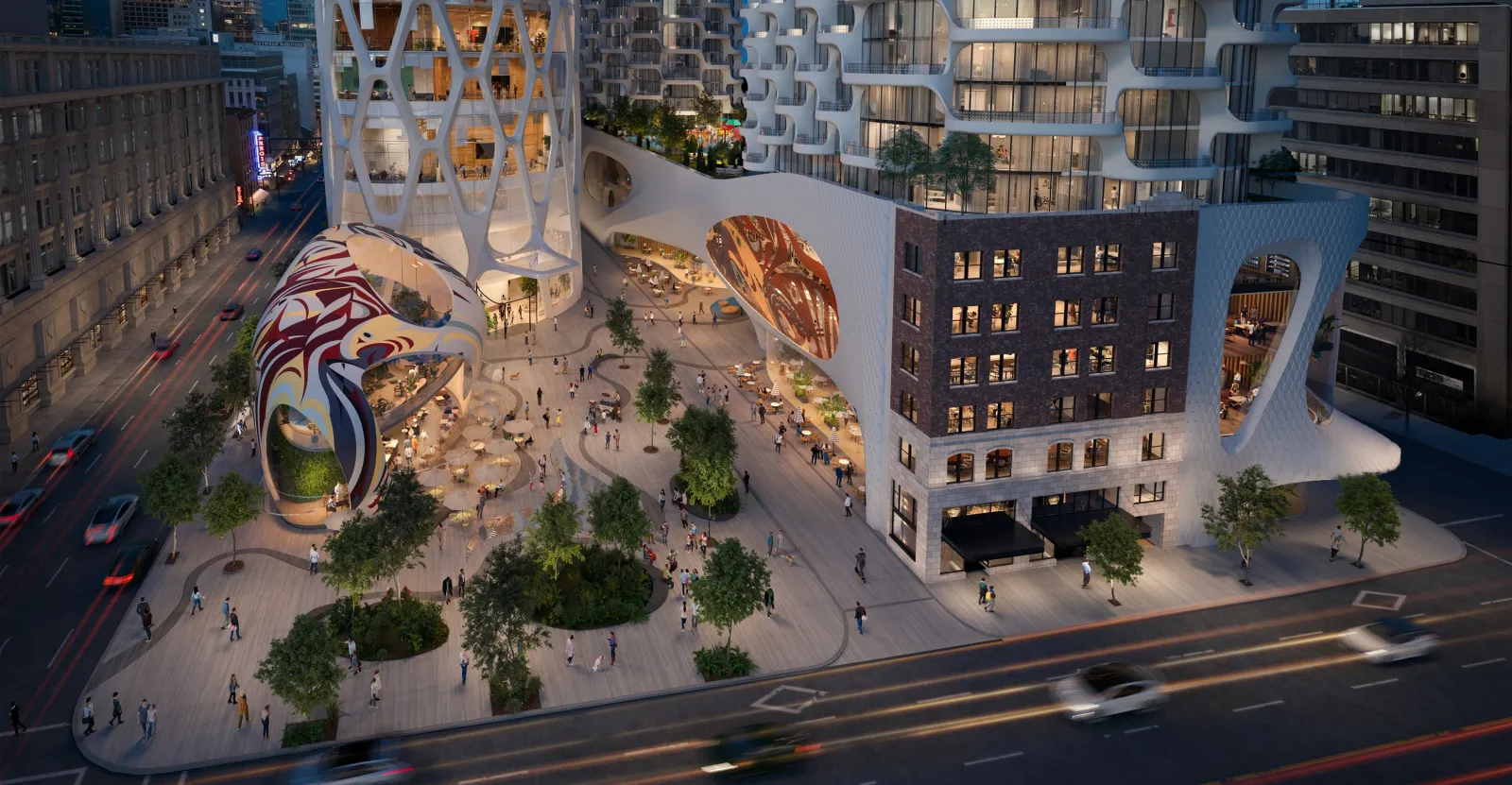
The development, designed by Henriques Partners Architects on behalf of Holborn Group, spans three sites: 501 and 595 West Georgia Street, and 388 Abbott Street. The project aims to help bridge Vancouver’s central business district and Downtown Eastside area.
A total of four towers are proposed. Three towers will be built along West Georgia Street, ranging in height from 783 feet to 1,033 feet, with a fourth tower on Abbott Street planned to be 402 feet tall. The tallest building is a freestanding hotel at 595 West Georgia Street.
Enriquez Partners Architects said the project challenges conventional concepts.
“This project redefines the public interest in high-density urban development,” the company said in a statement. “On the top floor of the hotel tower (a space normally reserved for private use), there is a publicly accessible observation deck designed by PFS Studio and inspired by a ‘forest in the sky’, offering panoramic views of the city, mountains and sea.”
Its elevated green space is positioned as a key feature of the hotel tower, placing public access and nature at a height rarely available to the broader community. Rather than reserving the top floor for high-end amenities, this design allocates one of the building’s most dramatic vantage points for public use.
Architecturally, the hotel tower is defined by what the company describes as an “iconic structural diagrid exoskeleton.” According to Henriquez Partners Architects, this system allows for column-free interiors while maximizing strength and minimizing material use. Developed in collaboration with engineering firm Arup, this structural concept draws inspiration from an unusual source.
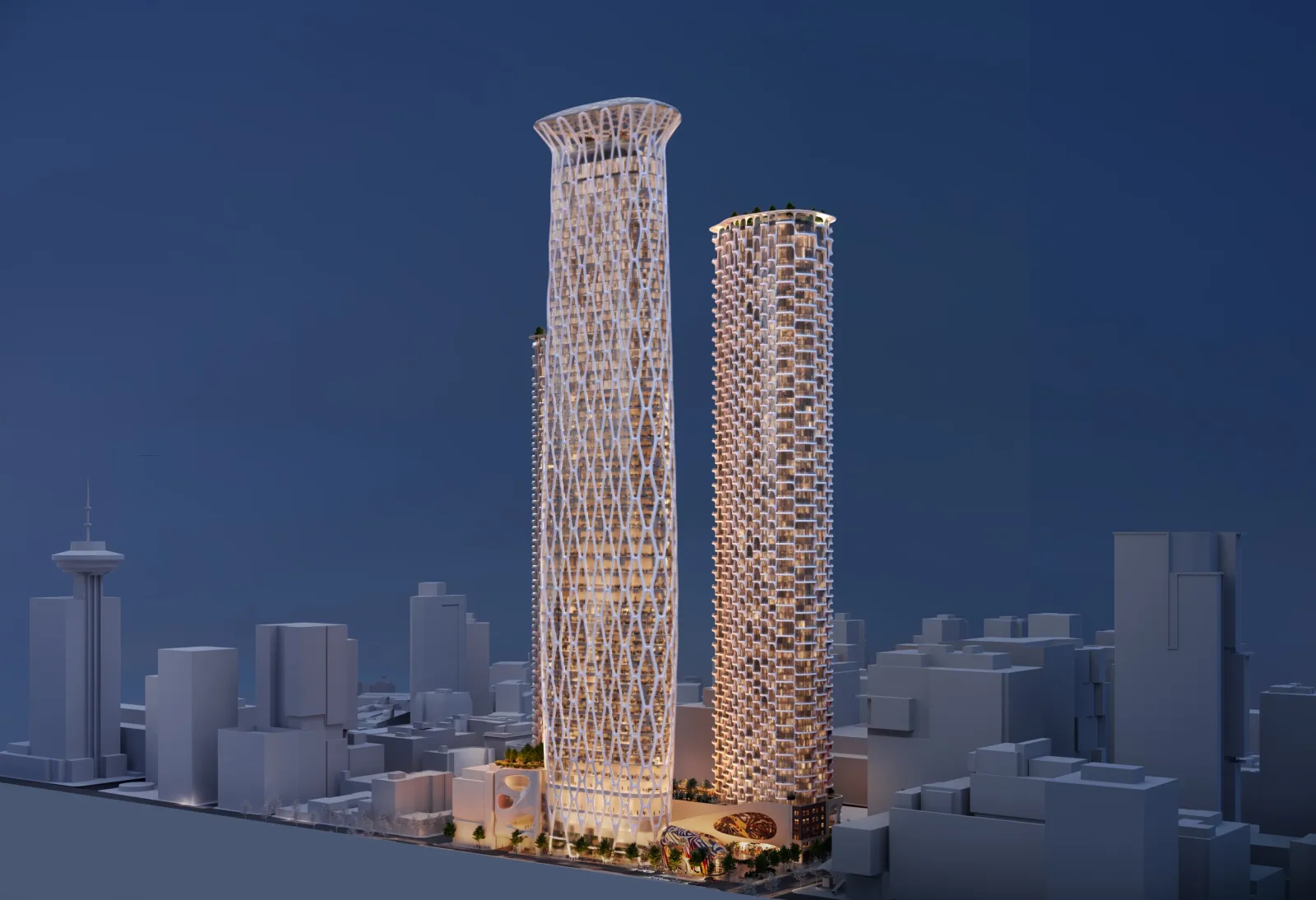
“This structural system is inspired by the skeletal lattice of sponges, and the concept is being studied at Harvard University for breakthrough structural efficiencies,” the company said. The design approach uses this natural model to inform both the tower’s shape and performance.
According to the architects, a connection with the natural environment was a guiding theme throughout the project. A spokesperson for Enriquez Partners Architects said: newsweek Its inspiration came directly from British Columbia’s landscapes and ecosystems. The company says the project’s overall goals and vision have always centered on “celebrating the historic, cultural and natural landscape of Vancouver and British Columbia.”
Gregory Henriques, principal architect at Henriques Partners Architects, said the tower’s architectural language clearly tells a local story.
“The architectural expression of this project tells a story unique to British Columbia and was inspired by rare and ancient glass sponge reefs, living structures found off the coast of British Columbia that exhibit strength and adaptability,” Enriquez said. newsweek. He added that this metaphor is reflected not only in the silhouette and sculptural shape of the tallest tower, but also in its environmental performance towards a net-zero carbon operation.
“Reflecting the structural ingenuity and ecological purpose of the sponge, the tower expresses Vancouver’s unique sense of sustainability, beauty and vertical urbanism,” he said.
The project is positioned as a long-term investment in both architecture and community. Holborn Group president Joo Kim Tia said the proposal was a milestone.
“We are extremely proud to be driving this generational project, rooted in community needs, extraordinary architectural innovation, and reconciliation,” the President said. “This project aims not only to address today’s challenges, but also to inspire future generations.”
A spokesperson for the team behind the project said: newsweek The city is currently considering it.
“This project recently received unanimous support from the City of Vancouver’s Urban Design Committee and is currently awaiting a public hearing,” the spokesperson said.
Do you have an architecture or design-related story you’d like to share? Let us know via life@newsweek.comyour story could be featured in Newsweek.
#Plans #revealed #1033foot #skyscraper #forest #sky