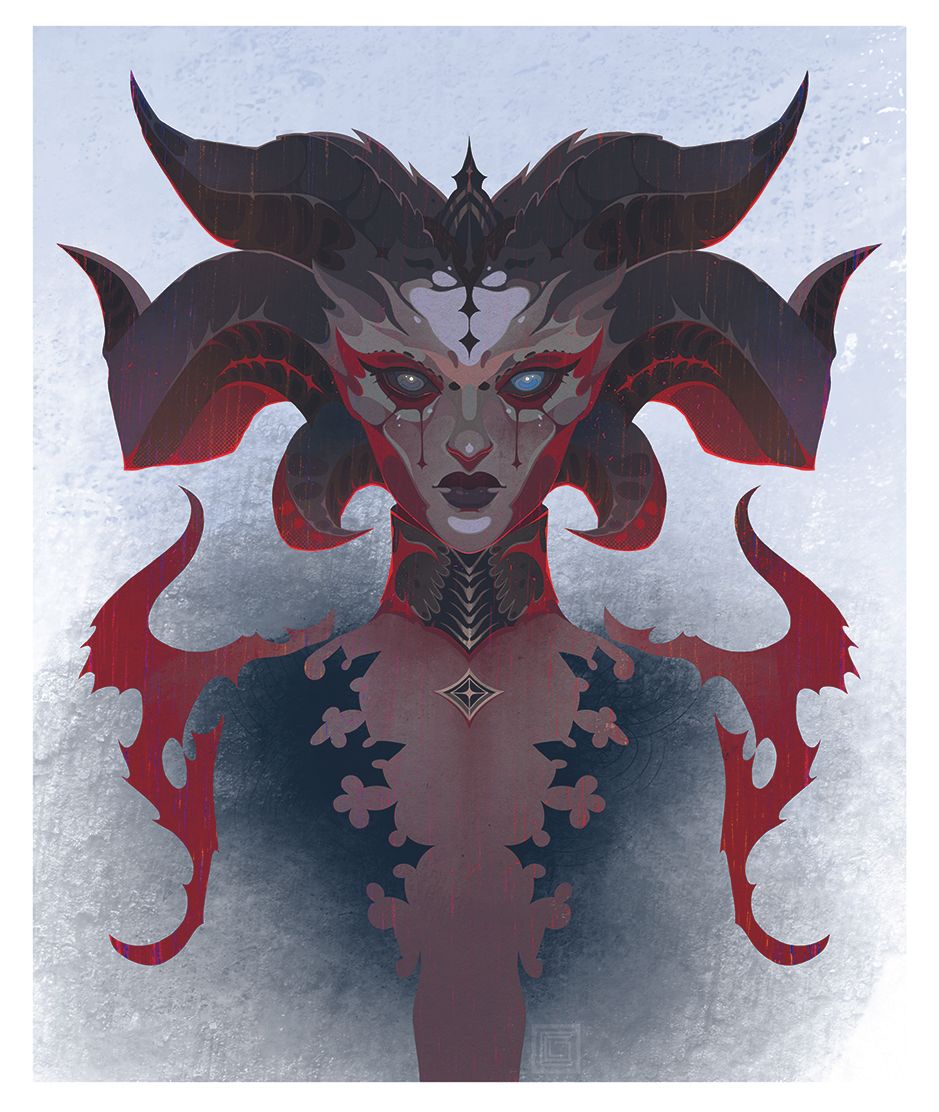
Finding your tribe, people who deeply love your work and truly understand what you’re doing, is one of the most fulfilling and joyful aspects of being a creator. Fan art is a smart and efficient method as it gives you access to a ready-made community of like-minded people. And if you’re lucky, you might even get a job opportunity or even the chance to create art in an official capacity.
“Creating fan art connects people who enjoy the same things and helps me reach people who wouldn’t normally see my artwork,” says Lara Georgia Carson, senior designer at production and animation studio WildBrain.
Article continues below
“Fan art allows me to visually express my admiration for something I enjoy,” explains Lara.
Image credit: Lara Georgia Carson

Fan art of Lara, the main character in Frieren: Beyond Journey’s End
Image credit: Lara Georgia Carson
Putting your own spin on beloved characters from various works of fiction and emphasizing the traits that are most important to you is a surefire way to enrich everyone’s enjoyment – you and the viewers who share it with you.
“Creating artwork for your favorite characters is like speaking to a community or fandom with a voice that is uniquely yours,” says Daniel Kamardin, an illustrator who also designs statues and collectibles for original and existing franchises. “Your art style is uniquely yours, and drawing a character your own way is a contribution to both your specific fandom and the art community as a whole.”

Daniel sometimes chooses subjects related to popular culture, but more often he prefers to evoke nostalgia through things he saw and played with in his youth. He says experimenting with different fandoms is the key to finding your fans.
“You end up attracting people who fit into the same section of the fandom Venn diagram,” he says. “For example, we’ve found a particularly fun niche of Hololive fans who enjoy members drawn in a more classic style, like myself, rather than a ‘purist’ approach in line with the original art style. ”

Fan art helps you find your followers
This is not only a way to find like-minded people, but also a way to increase your following. “Fan art attracts the most people, and if you create work for a specific IP, you’re guaranteed to have an audience,” says artist and comics creator Sean Kyle Manaloto.
“Consistency is key, and posting your art in IP-specific places like Facebook fan groups and using several hashtags and tagging accounts related to fan art can help.” Lara says taking community requests and participating in trending fan art challenges are great ways to get your work seen.

“Recently there was the Free Ren art challenge, and a few years ago there was the Sailor Moon challenge. Both were hugely influential in both the art community and the fan community. When new content comes out and gets talked about, it’s good to strike while the iron is hot. And trending fan art posts can drive people to your page.”
As your art gains more attention, there’s always a chance that you’ll be noticed by people who want you to work with them. Some of Lara’s fan art was licensed to the original IP and used as promotional materials, and official art for Disney Lorcana was also created. This is how Daniel got his start in the industry, and Sean has been asked to work on a variety of projects, from tabletop campaigns to video games and art books.

“I like to pay close attention to a character’s body language and facial expressions,” says Sean.
Image credit: Sean Kyle Manaloto

Shaun’s version of Raziel from the 1999 video game Legacy of Kain: Soul Reaver
Image credit: Sean Kyle Manaloto
Beyond fan art
Despite the success that fan art brings, it’s good to remember that it’s just one string to a bow. There can be pitfalls if you rely too much on it to grow your following. Cartoonist, illustrator, and scenic designer Bailey Rosenlund says growing your audience should be a side effect, not a goal.
“When you create art based on what your audience wants, you end up feeling miserable and burnt out,” she says. If one piece of fan art does really well, you may feel pressured to create another similar piece of artwork. “If you really don’t want to do it, just don’t do it. Fan art is fun and indulgent, and it should be created for yourself first and foremost.”

Bailie also advises on a thoughtful approach to using fan art in a professional portfolio. “Different artists and art directors have different opinions on whether fan art should be included in a portfolio,” she says.
“My portfolio includes some fan works, but the majority of them are original. The fan works I include are ones that showcase things I’m particularly proud of: my composition, lighting, and color sensibilities. Also, in my work as a cartoonist, I sometimes have to draw on existing IP, and this gives my clients a quick insight into how I’ll interpret their IP into my own style.”
Creating fan art not only helps you reach people, but it’s also a great way to hone your art skills. Bailey says he often learns new and unexpected things by closely studying design decisions found in the media he references. “It’s a great opportunity to learn from other artists,” she says.

Fan art and learning curve
Lara says that creating fan art not only helps her promote her style and engage with media in a more experimental and critical way, but it’s also great preparation for working in a production environment.
“When you work on a TV show as a designer, you have to be able to fit that style and create within an established world. It’s a bit like making ‘official’ fan art, so unofficial art is a good exercise for that.”

Daniel uses fan art to practice basics and experiment with techniques. “Having a familiar character or subject matter to practice with makes it easier to focus on what you want to learn from the particular piece you’re drawing,” he says. “Learning how to make lines cleaner, how to create more appealing compositions, how to render in a certain way, etc. all started by drawing my favorite characters.”

Sean feels there are benefits to artistic endeavors as well. “The process of creating fan art has greatly expanded my visual library and taught me many lessons, including how to improve form, make textures more authentic, and hone my attention to detail,” he says.
“Creating fan art is always challenging and always teaches me something new that I can apply to my personal art.”
Natalia Klimczak is a UK-based painter and illustrator whose work is inspired by fantasy and fairy tales. She focuses her fan art on book characters rather than characters from movies or other visual art. Because this gives you more creative freedom. “You’ll often get a rough idea of what your character looks like, but the rest is completely up to you,” she says.
“I love adding little bits of myself and my aesthetic to my favorite characters. I think drawing fan art of book characters is probably my favorite thing to do. I consider the character’s personality, aesthetic, and the themes surrounding them.”

Cardan Greenbriar, the fairy prince imagined by Natalia (from the Air People series by Holly Black)
Image credit: Natalia Klimchak

Dreamy rendering by Natalia of the game Hades character Sleep Incarnate, Hypnos
Image credit: Natalia Klimchak
She said fan art has expanded her career opportunities, but it’s not her main reason for doing it. “Being obsessed with the medium and feeling inspired to draw my favorite characters definitely played a huge role in becoming the artist I am today. It kept me motivated and made learning how to draw more fun.
“There’s nothing more exciting than working on a project related to a series you love, but that’s not why I do it. You can spend years creating fan art of your favorite characters and never get noticed.”
For some inspiration, check out these tips from five artists on how to make your fan art original and fresh.
This article originally appeared on ImagineFX. Subscribe to ImagineFX Don’t overlook any problems. Print and digital subscriptions are available.
#find #creative #niche #fan #art