
[–>
When elderly Miamians are removed from their homes by social service workers assigned to safeguard their welfare, they are usually strapped into an ambulance for a trip to Larkin Community Hospital, which was at the center of two Justice Department investigations into kickback schemes involving admission of patients for unnecessary treatments.
[–>
The Florida Department of Children and Families’ reliance on Larkin means elders bypass neighborhood medical centers on a detour to hospitals in Hialeah and South Miami, where patients were pawns in what the FBI described as a $1 billion Medicare and Medicaid fraud scheme — the nation’s largest ever.
[–>
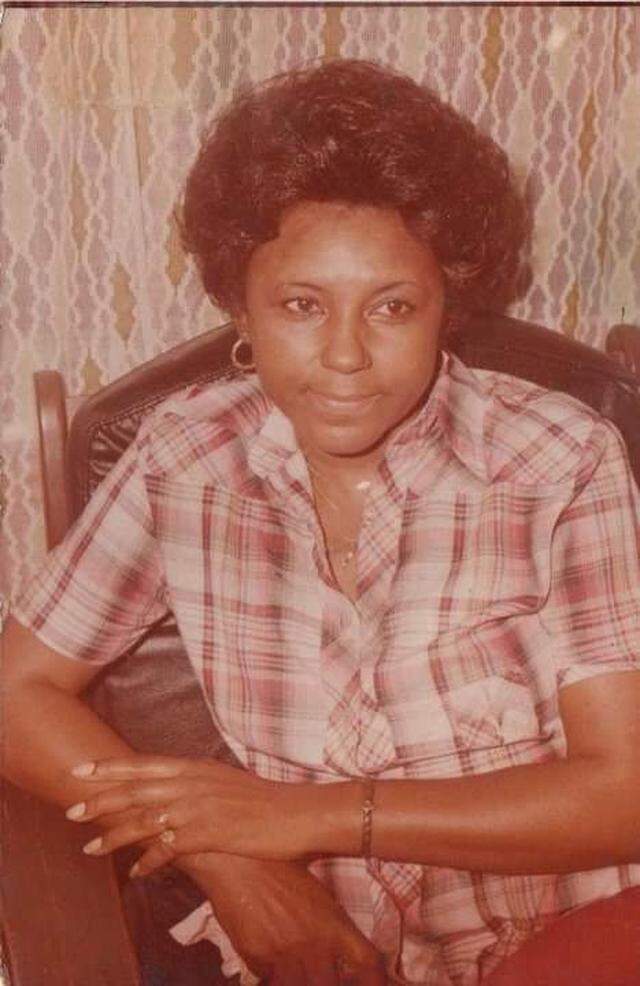
Aron Williams, a retired cosmetologist with dementia, got swept up in the DCF-Larkin relationship when she was sent from her home in North Dade to the South Miami hospital, where doctors diagnosed her with schizophrenia — a condition that usually manifests in adolescence or young adulthood — at age 84.
[–>
“I felt as though I was violated. I felt as though my mother was violated,” said Williams’ daughter, Brenda Broadnax. “She wasn’t treated like a human. She was treated like an animal.”
[–>[–>
Williams was moved from Larkin to the Villa Rosa assisted living facility in Hialeah without her daughter’s knowledge by Miami-Dade DCF Adult Protective Services placement specialist Tania Hernandez, Broadnax said. Hernandez has been investigated by her own agency, but never found at fault, for steering elders in state custody to a select group of assisted living facilities via Larkin.
[–>
Colleagues accused Hernandez of accepting kickbacks from ALFs — many with records of poor care — eager to fill beds with clients whose bills are subsidized by taxpayers. Hernandez, a 38-year employee of DCF, was cleared of any wrongdoing in five investigations.
[–>
Geoffrey D. Smith, an attorney for the hospitals, told the Miami Herald the same investigation that cleared Hernandez also identified no wrongdoing on the part of Larkin or any of its staff. “There is no financial incentive or other benefit to Larkin for cooperating with DCF in providing medical examinations for the safe discharge and placement of vulnerable adults into care facilities,” Smith said.
[–>
“Larkin Health System has no knowledge of any improper conduct by any of its officers, management staff or employees, and requires that all employees or representatives adhere to the highest standards for ethics and integrity,” Smith said.
[–>
DCF’s heavy reliance on Larkin so disturbed a court-appointed lawyer who has represented scores of elders and disabled adults taken into state custody that he complained to the Miami-Dade State Attorney’s Office, a Miami judge and DCF’s Inspector General that something “inappropriate” was happening. The judge and prosecutor, who are not named in DCF records, declined to act.
[–>
[–>[–>
“I was very concerned my clients were being somehow abused,” attorney Harrison Griffis told the Inspector General. “Their civil rights were being exploited — sending them away from their support network, sending them away from their homes.”
[–>
Seniors who lived “as far south as Homestead were transported past several local hospitals to Larkin Community Hospital in South Miami,” an ambulance ride of about 27 miles, Griffis said.
[–>
“I had two cases that I just did where they were literally across the street from Hialeah Hospital” and were taken instead to Larkin, he said.
[–>
Griffis analyzed 34 removal cases assigned to him. In 26, Larkin was the magnet.
[–>
“Almost every single client has been filtered through Larkin Hospital,” he testified as part of an Inspector General probe. Larkin caseworkers told him “we only deal with Tania,” and she decides where they’ll live. “On some occasions, the decision has been made without anyone asking the (client) or their family for a placement choice.”
[–>[–>

[–>[–>
Other social welfare programs have safety valves to protect weak, incapacitated or disabled clients from being exploited by people in power. Florida’s adult protection program lacks such guardrails.
[–>
The state’s involuntary commitment law generally requires that Floridians in mental-health crisis be taken to the “nearest receiving facility.” The law was designed to discourage hospitals from milking the Baker Act to fill beds — but also to keep psychiatric patients in their own neighborhoods, where they fare better. But there is no such law protecting elders. “They’re being taken away from their families and their friends and their support networks,” Griffis testified.
[–>
Griffis declined to speak with the Miami Herald about the concerns that he expressed to DCF’s Inspector General.
[–>
Given its history, Larkin might seem a puzzling choice to partner with a state agency charged with protecting elders who cannot care for themselves.
[–>
Larkin, based in South Miami, and its former owner and CEO, Dr. Jack Michel — he now works there as an educational administrator — had a long relationship with now-convicted healthcare mogul Philip Esformes. In 2006, Michel, Esformes, Esformes’ father and the hospital’s previous owner paid $15.4 million without admitting guilt to settle a healthcare-fraud lawsuit in which the federal government alleged that Michel received kickbacks in return for patient admissions to Larkin. The suit also accused Michel, Esformes and others of admitting elderly patients from ALFs owned by Michel and Esformes to Larkin for medically unnecessary treatment paid for by Medicare and Medicaid.
[–>
Michel now oversees Larkin’s graduate medical educational programs and is chairman of Larkin University, which is governed separately from the hospital, said Smith, the hospital’s attorney. Smith said neither Michel nor the university play any role in the placement of elders in state custody.
[–>
In 2019, Esformes was found guilty in a separate case and sentenced to 20 years in prison for running what the U.S. Justice Department called the largest healthcare-fraud scheme ever prosecuted. Prosecutors said he cycled patients through his nursing homes and assisted living facilities despite “poor conditions” and “inadequate care” and personally netted more than $37 million.
[–>
Authorities called Esformes a “vampire” who was “driven by almost unbounded greed.” A key conspirator, a Larkin administrator who processed Medicare patients for cash, pleaded guilty and cooperated with prosecutors. In 2024, Esformes pleaded guilty to another fraud count, four years after President Donald Trump commuted his sentence and freed him from prison.
[–>
DCF supervisors explained their preference for Larkin in testimony during an investigation of Hernandez: Larkin’s administrators were willing to hold onto DCF’s patients long enough to ensure a full evaluation.
[–>
Hernandez and several other state employees told an investigator they were looking out for the wellbeing of at-risk elders, who were released too quickly by some hospitals back to hazardous conditions at home when they should have remained under doctors’ care.
[–>
“We had many cases where [an Adult Protective Services investigator] “They’re going to spend hours in their homes, working with police and ambulances, and arguing with their clients so they can get them out,” Hernandez said. Within 24 hours, they will be returned to a hazardous environment. ”
Smith, Larkin’s attorney, said DCF clients remain at the hospital only until their medical and treatment needs have been met, and doctors have ordered their release. “Larkin does not discharge these vulnerable adults until the DCF caseworker has found placement,” often providing medical care without reimbursement, Smith said. He added that the hospital sends “DCF clients to the placement determined by [the] I am a DCF caseworker. ”
And though Smith would not discuss Aron Williams’ treatment at the hospital, citing federal medical privacy laws, he said “Larkin is not aware of any finding of any deficiency in the care” rendered to Williams. He added: “Larkin would note that its physicians are board certified and that they use their professional medical judgment to treat all patients based on their presentation and symptomatology.”
[–>
Griffis said in his interview with the Inspector General that the Larkin hospitalizations, with doctors deciding his clients were “unsafe to discharge home,” made it more likely that they would lose their independence.
[–>[–>
ARON WILLIAMS GOES TO LARKIN
[–>
Williams was living independently three years ago when she boarded a bus at a familiar Northwest 79th Street stop but could not remember where to exit.
[–>
“It scared me so bad,” said Williams’ daughter, Broadnax.
[–>
Broadnax wanted her mother to get a mental-health evaluation with doctors she chose at Aventura Hospital, but she said a state caseworker told her to send Williams to Larkin Hospital in South Miami instead. At Larkin, Williams was diagnosed not with worsening dementia but with schizophrenia, whose onset usually occurs in the late teens or early 20s.
[–>[–>
[–>
Williams had worked her entire life, first as a dorm mother at Florida A&M University and later as a cosmetologist. She raised seven children as a single mother. She’d never been diagnosed with a mental illness, her daughter said.
[–>
“When the doctor informed me, ‘Your mother has schizophrenia,’ I said, ‘That’s impossible,’ ” Broadnax said.
[–>
Williams’ medical records, which Broadnax provided to the Herald, largely confirm the daughter’s account. Records from visits with Williams’ primary care provider in May and July 2022 show Williams was being treated for depression and Alzheimer’s dementia, with the goal of slowing “the progression of dementia-related impairments and to control behavioral symptoms.”
[–>
When Williams was admitted to Larkin that October, records show she showed signs of “severe dementia,” including incoherent speech. Broadnax told hospital staff her mother had a “history of depression and dementia.” The hospital record, though, showed “schizophrenia” under past medical history.
[–>
If Larkin doctors believed Williams had schizophrenia, her records show they did not change her medication to treat it. Three days after Williams was admitted, the medical record shows, the plan was to “continue [her] “Home Remedies” included only two medications for Alzheimer’s disease and one for depression.
The schizophrenia diagnosis had consequences. The Coral Gables ALF that Broadnax and a state caseworker had picked for Williams reneged on admitting a patient with a severe mental illness, Broadnax said.
[–>

[–>
Williams’ psychiatrists at Larkin wrote that Oct. 13 that Williams would require a “proxy for all future health decisions during psychiatric hospitalization.” But Broadnax, her daughter who has power of attorney, said she found out only after the fact that Williams had been admitted to an elder care home.
[–>
Hernandez arranged for Williams to be placed at Villa Rosa, her daughter said. The home was one of Hernandez’s preferred spots, state records show. Hernandez moved Williams after assurances that they would discuss ALF options before a decision was made.
[–>
When Broadnax discovered her mother had been whisked from Larkin to Hialeah, she retrieved Williams from Villa Rosa and drove her to Aventura Hospital, where doctors once again reported only “a past history of Alzheimer’s dementia and major depressive disorder” leading to self-neglect and a failure to follow through with medication.
[–>
Williams — who had been living independently in the same apartment building as Broadnax with in-home care — died on Dec. 15, 2024, of pneumonia.
[–>
“They are aware that I have power of attorney,” Broadnax said. “No one from Larkin, no one from Children and Families ever called and said, ‘We’re going to transfer your mother.’ I did not give them permission to transfer. They didn’t have that right. Not at all.”
This story was first published April 2, 2026, 5:30am.
#Miami #Hospital #troubled #history #DCFs #goto #medical #center #seniors