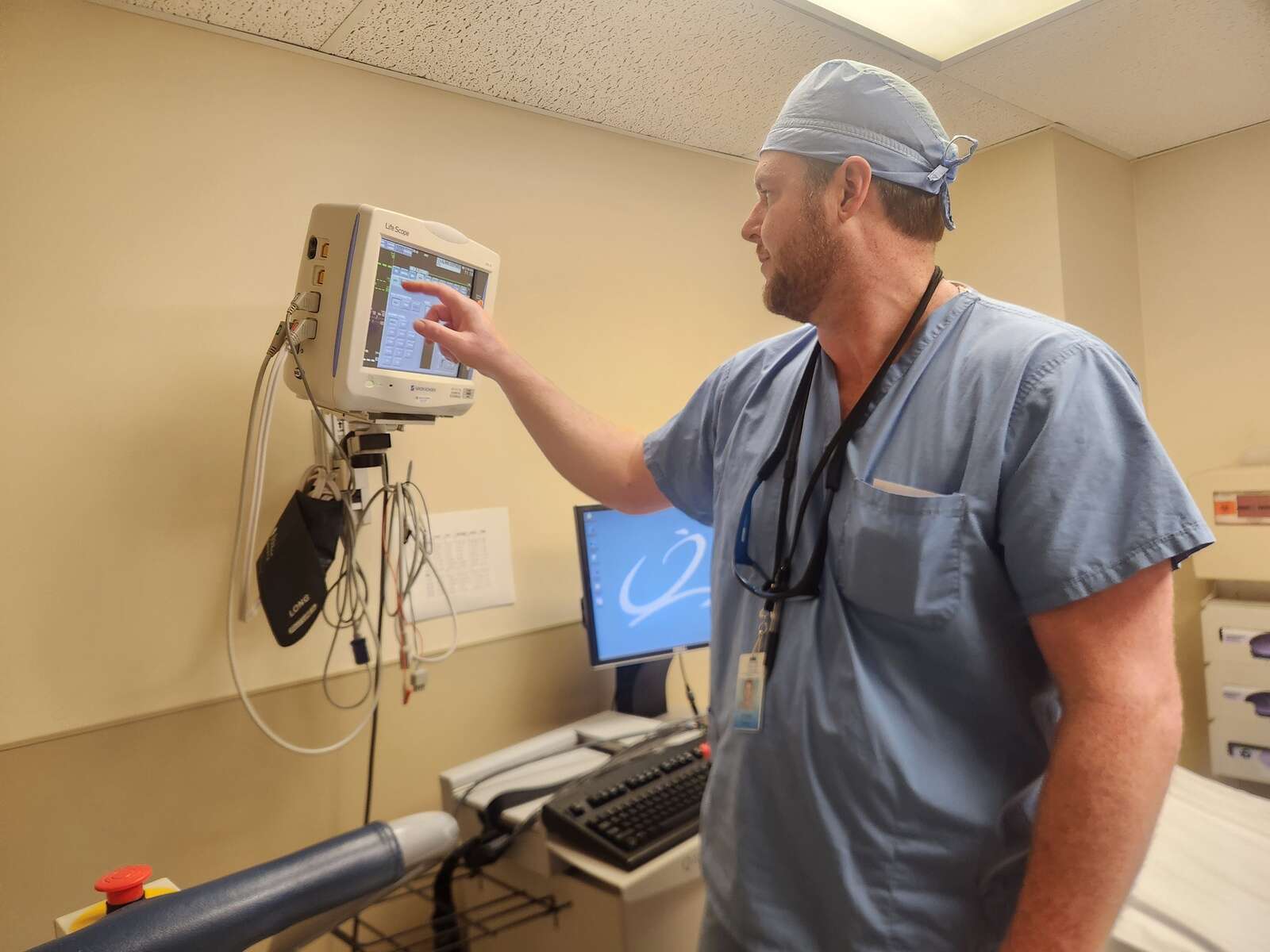
Dr. Joseph Kucik, an interventional cardiac specialist at Independence Health System, works in the patient exam room at Butler Memorial Hospital on Wednesday, Dec. 20. Butler Eagle File Photo
Transforming rural healthcare
West Virginia University Health System and Independent Health System have announced plans to merge in November 2025, which leaders say will expand access to specialty care and enhance services across Western Pennsylvania, making Butler Memorial Hospital one of the “tertiary hubs” of care.
The merger will bring the Independence Health System, which includes Butler Memorial Hospital and other facilities serving Butler County, into WVU Medicine.‘Wider medical network.
The goal is to reach an agreement by this fall.
Officials said the partnership aims to improve access to specialty care, invest in local facilities and apply WVU Medicine’s rural care model, which is used throughout the existing system, to expand services in small and underserved communities.
For Butler County, where many residents live in rural areas, leaders say this approach could help reduce the need for patients to travel long distances for advanced care while strengthening Butler Memorial’s role as a community care center.
October target date
“The transition is going very smoothly,” said Ken DeJulio, President and CEO of Independence Health System. “We are on schedule and there are no delays or hold-ups. Another part of this is the regulatory review from both the federal and state governments: the Federal Trade Commission at the federal level and the Pennsylvania Attorney General’s Office. That will happen after the final agreement is negotiated and submitted. That will happen on or before July 1st. We sent them preliminary information in January to let them know what’s going on.”
Once the parties reach a final agreement and submit it to the state and federal governments, they have up to 90 days for approval, DeJulio said.
“We hope to have everything taken care of and officially become part of WVU by Oct. 1,” DeJulio said. “The dates that we announced a while ago have not changed. There is nothing that will prevent us from reaching that date.”
DeJulio said the government’s regulatory review involves two things. One is antitrust law. This means that when two organizations partner in this way, regulators want to see more competition, not less.
“Another important thing is to make sure that charitable assets are maintained,” DeJulio said. “Both organizations are charities by definition. All we need to do is make sure that the assets on our balance sheets are actually going towards healthcare in our communities.”
capital improvements
Albert Wright, president and CEO of WVU Medicine, said regulatory review is not the “sexiest” subject, but it still needs to happen to ensure the deal goes smoothly.
“Once those things are done, we actually go into the final due diligence stage of dotting the I’s and crossing the T’s,” Wright said. “You have to go through a lot of documents and start figuring out what the structure is.”
One of those projects is an expansion of Butler Memorial Hospital’s emergency department, Wright and DeJulio said.
“We don’t want to disrupt operations,” Wright said. “We want to put a few shovels in the ground this October and implement some projects that will show the community how serious we are about creating better health care. In Butler County and everywhere we operate. ”
Another project Butler community members will notice early on after the transition is the expansion of Butler Memorial Hospital’s women’s health services, but that’s not the only project, DeJulio said.
“Given the way health care is delivered these days, most of the care doesn’t happen within the walls of a hospital, so we’re going to see an investment in outpatient care throughout Butler County,” DeJulio said. “We’re going to solve this problem and solve it. That’s going to include more doctors and testing.”
These investments were announced when a letter of intent was signed in November 2025, in which West Virginia University Health System announced it would invest $800 million over five years to modernize Independence Health System’s operations and dedicate $200 million to capital improvements.
DeJulio said Independence has presented WVU Medicine with a list of projects it wants to work on, including expanding its emergency department and women’s health services.
“We call it strategic capital,” DeJulio said. “What we mean here is capital that we want to use to make strategic investments that we haven’t been able to make. We’ve also presented some day-to-day capital investments, like replacing a CT scanner or roofing a building. The typical five-year spend for that is about $200 million.”
Another key element of the proposed merger is an overhaul of the system’s electronic health records. According to a letter of intent for the transaction, WVU Medicine has committed $80 million to implement a new medical records system from Epic Systems.
The goal of these investments, particularly at Butler Memorial Hospital, is to make BMH one of WVU Medicine’s “tertiary hubs” within the system, providing patients with complex, specialized and technologically advanced care.
“What we’re trying to do is try to make BMH as inclusive as possible for the community,” Wright said. “This includes things like enhanced cardiac care, advanced neurological care, and spine care. It also includes cancer treatment capabilities and clinical trials to keep people from having to go to Pittsburgh or Morgantown. Those are things that we’re really going to start looking at.”
Essentially, WVU Medicine intends to make BMH a one-stop shop for medical care, DeJulio said.
“At the end of the day, it just comes down to patient choice,” DeJulio said. “There is no intention or expectation that patients have to go to Morgantown to receive advanced care. This investment is to ensure that people don’t have to go anywhere else. One-stop-shop is a good expression. This is a really good thing for the community.”
accept a debt
If the merger is approved, WVU Medicine will assume all of Independence’s current debt. The amount is about $110 million, DeJulio said.
“If you add in these debt guarantees, you’re putting about $1 billion into the health system,” DeJulio said. “If someone comes along and says they’ll pay off the loan on your house, that’s a pretty big monkey off your back.”
Once combined, the new health system will have approximately 42,000 employees, approximately 35,000 of whom will be WVU Health System employees.
The letter of intent states that all employees’ positions will be guaranteed for one year after the merger closes. If things go as planned, both presidents don’t expect any layoffs to occur beyond that year.
Wright said WVU is going the extra mile to ensure its employees are taken care of. For example, any third-year employee at WVU Medicine can send their child to WVU at no cost.
insurance
Another motivation for the merger, DeJulio said, is the ability to partner with Peak Health, a nonprofit health insurance company that is partially owned by WVU Medicine. Unlike competitors UPMC and Allegheny Health Network/Highmark, Independent Health System is not currently integrated with a health insurance provider.
“They use it to control costs, but how do they do it?” DeJulio said. “We want to make sure patients get what they need, but we want to do it at the lowest possible cost. We can share information with providers and patients and keep costs down. We’re committed to being part of the solution, not part of the problem.”
Wright said he wants to expand Peak Health to offer more lucrative plans.
The future of rural healthcare
DeFurio believes the partnership with WVU Medicine makes sense because of the demographics of the area it serves and the school has had great success implementing rural medicine. Both presidents feel this model applies well to Western Pennsylvania.
“West Virginia is hard to serve in terms of health care,” DeJulio said. “They’re very rural and hard to get to. They’re focusing not just on medical services, but rural health care for people who don’t have a lot of means.”
Wright said there is no big secret to making rural health care successful, it just requires committing resources, both capital and employee, to ensure residents receive the best care.
“At Wheeling, we have done a great job of building orthopedic capabilities and neuroscience,” Dr. Wright said. “I think someone like Ken would look at a model like ours and say we want to build this and do it in Western Pennsylvania.”
Wright said the partnership with Independence Health System makes sense because of the strong cultural fit and growth mindset of both parties.
“We wouldn’t be doing this if we didn’t have a growth mindset,” Wright said. “We’re not going to downsize these facilities, lay off employees or cut services. I think any concerns they have will go away once they see the investment being made in both capital and physician recruitment.”
This article originally appeared in the April issue of Butler County Business Matters.
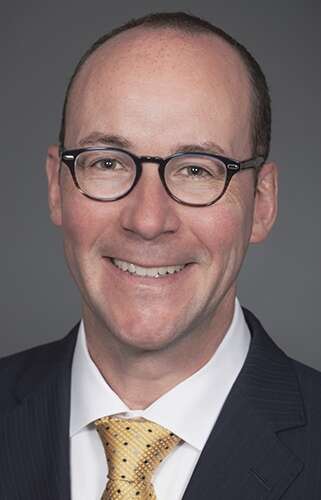
Albert Wright is president and CEO of West Virginia University Health System. Posted photo
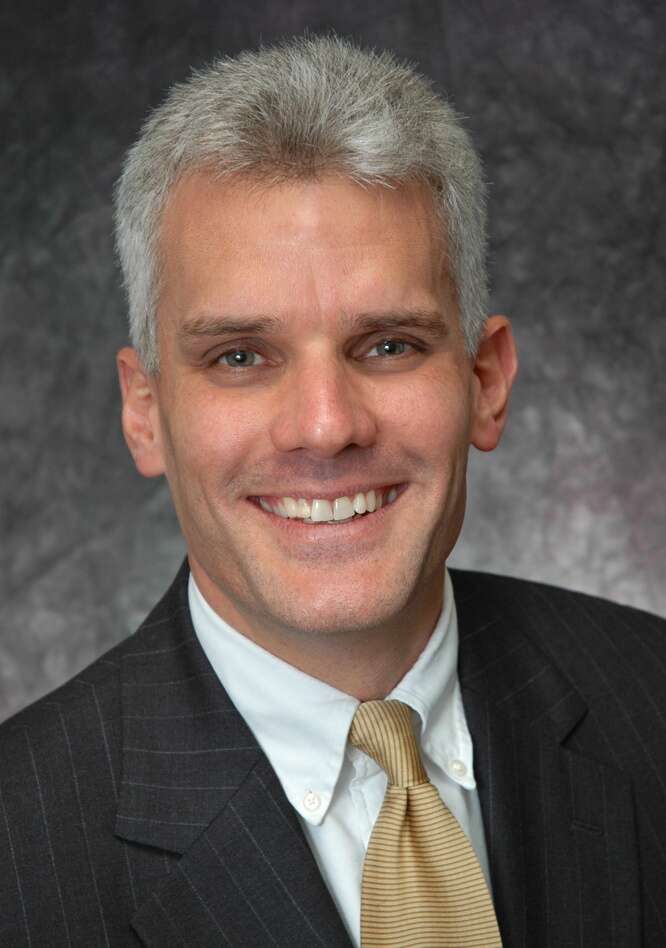
Ken DeFurio is President and CEO of Independent Health System.
#Independence #Health #System #WVU #Medicine #presidents #share #merger #update #billion #commitment #means