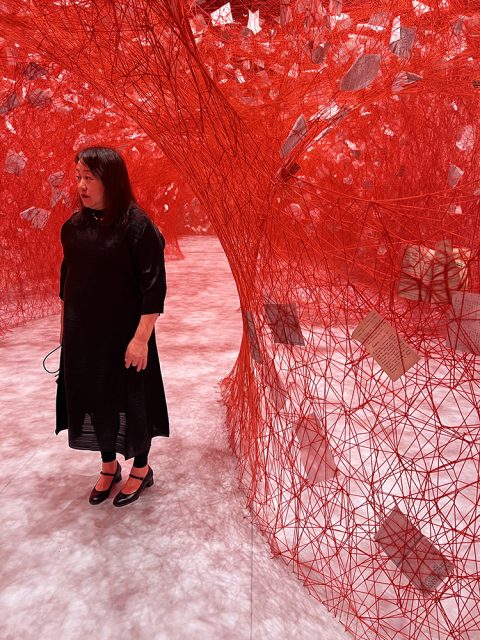
“One chopstick is “me.” But in order to eat, I need two chopsticks.” said Chiharu Shiota, a Japanese painter. She made the remarks in front of a video of three performance art pieces (“Wall,” “Bathroom” and “Earth and Blood”) in her new exhibition “Two Home Countries,” which opened April 3 at the Asian Art Museum in San Francisco.
These are the most challenging works in the show, using the graphic physical materials of blood and mud to tackle themes of miscarriage, cancer, and death. Although these works are the result of her very private experiences, she hopes that by expressing something personal through art, she can transform “me” into “us,” just like in the example of chopsticks.
But Shioda is best known for his works made from intricate webs of yarn, and that’s how “Two Home Countries” began. Walking through a red lace tunnel plastered with pages of text that are authentic copies of the diaries of Japanese soldiers during World War II, viewers feel as if they are being sucked into another time and space.
It took 10 people two weeks to install “Diary,” a piece created especially for the Asian Art Museum using 20 miles of red thread. The network of threads embodies the soldiers’ memories and also reflects the shape of a neural network with intersecting patterns, deliberately chosen by the artist. Once again, the intimate interior of the body is externalized and reflected in the shadows on the gallery floor.
Shiota has already achieved great success with her intricate thread designs at the 2015 Venice Biennale. But it wasn’t a time for celebration. She was also struggling with a diagnosis of ovarian cancer. This led her to thoroughly explore this theme in her work.
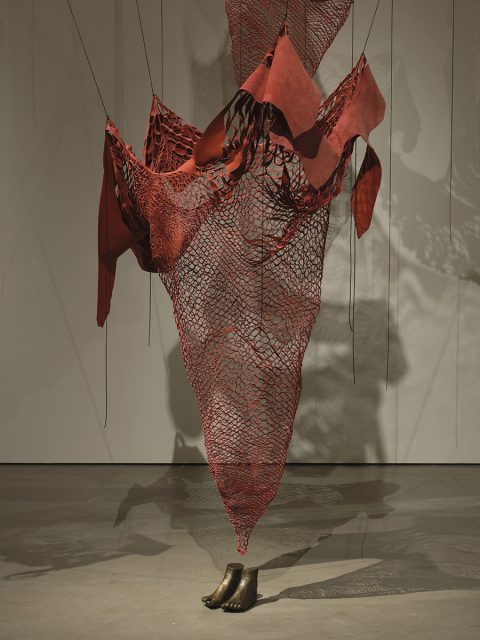
The work “Beyond My Body,” which includes a bronze casting of the artist’s foot and a porous suede net that recedes from it, was born out of Shioda’s experience with chemotherapy. “My legs are standing, but my body and soul are no longer connected,” she said. This theme continues in “Cell,” where the fragility of glass and fabric objects suggests cancerous growth, contrasting with the solidity of Shioda’s cast bronze feet in “Beyond My Body.” Shadows from the intricate web are again projected onto the floor, creating another layer to the piece.
Red dominates the exhibition: yarn, yarn, leather, blood. For Shioda, it symbolizes many things. “It’s family, nationality, religion and culture,” she says. It is encoded in the work from which the exhibition takes its name.
“Two Homelands” symbolizes the tension between Shioda’s home country, Japan, and his second Germany. Even though they are in their respective countries, she misses the other person. But despite the exhibition’s eponymous artwork, the visceral themes of body, blood, and memory—life and death—dominate over any sense of homecoming.
“It is rare to find an artist who is so confident and comfortable using his own very private experiences as a means of expressing the universalizing aspects of life,” said Robert Mintz, chief curator of the Asian Art Museum.
When asked if he enjoys teaching, the artist quickly replied, “I don’t enjoy it.” She prefers to let her art speak for her. Perhaps that’s part of how she was able to encode the deepest meanings in her work.
Shioda is interested in how objects can carry on memories, but he also turns that question inward. “I often ask myself: What will be left when my body is gone?”
-
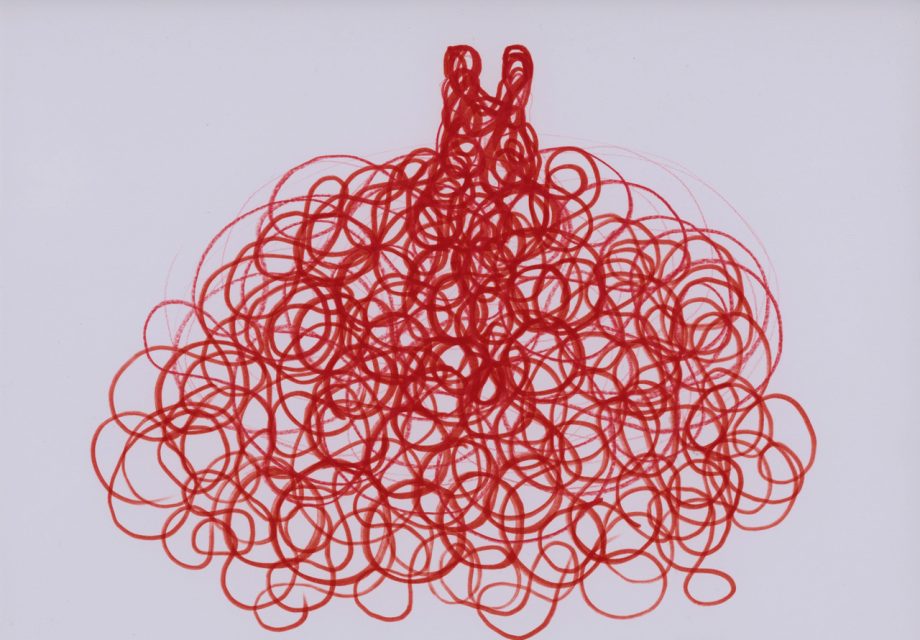
Chiharu Shiota “Sketch to Two Hometowns” (2025) © ARS, New York, 2025 and the artist -
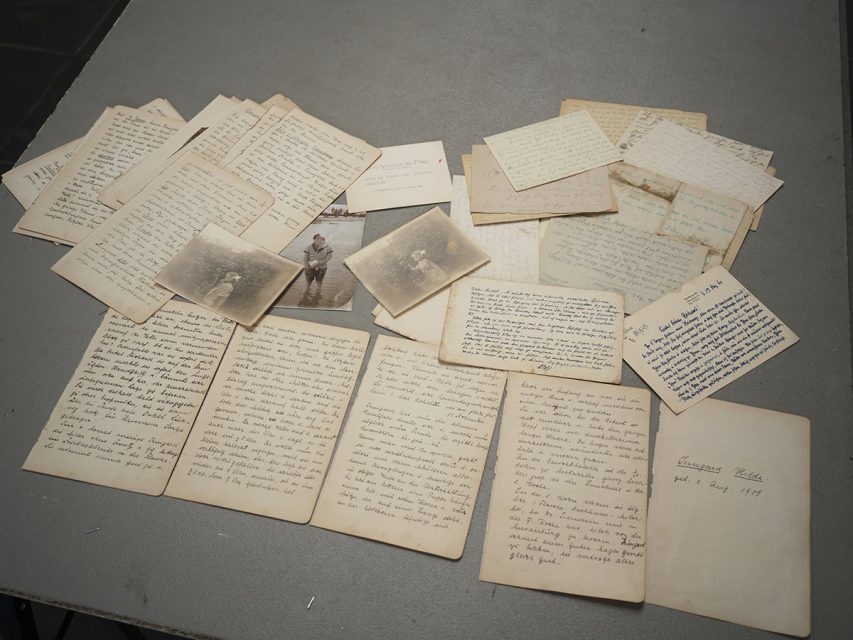
A selection of diaries for the Japan Society diary (scheduled to be installed in 2025). Berlin, 2025. Photo by Sunhi Mang -
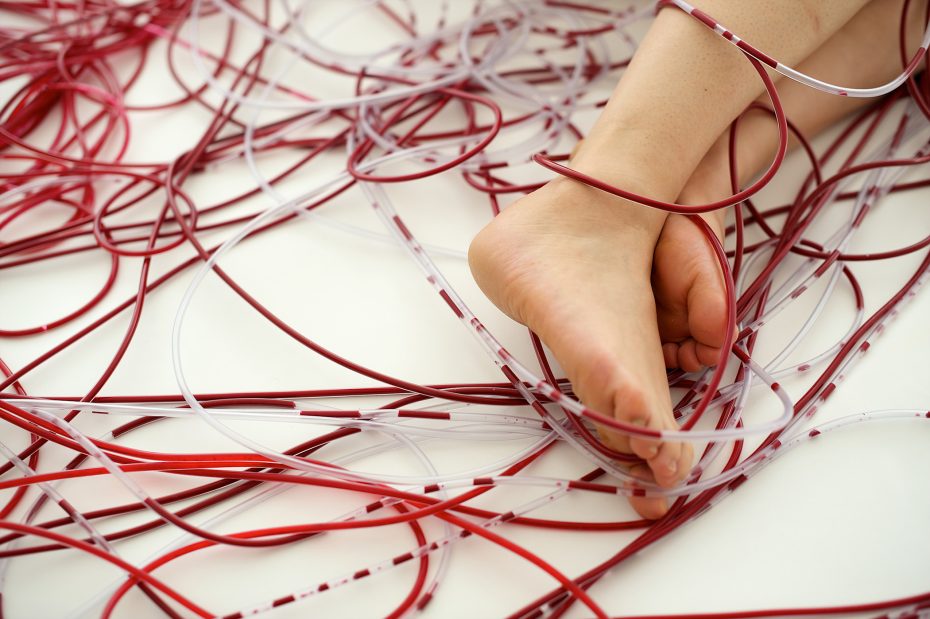
Chiharu Shiota, wall, 2010. Performance video – tube, red liquid. HD DSLR video, color, sound, 3’39”. © ARS, New York, 2025 and the artist -
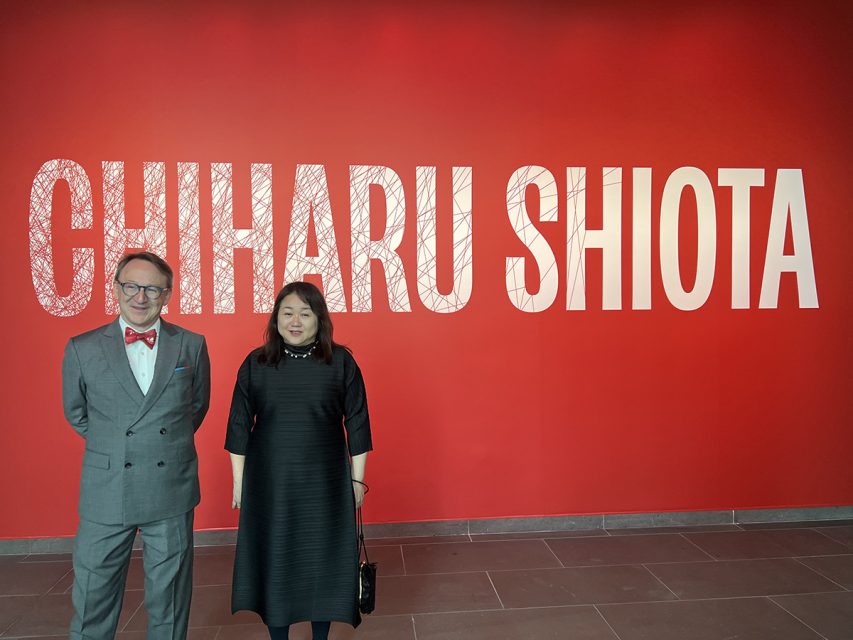
Robert Mintz, chief curator of the Asian Art Museum, and artist Chiharu Shiota. Photo credit: Julie Gigoris
#Blood #dirt #cobwebs #create #heartbreaking #pain #Asian #Art #Museum