The camera projects the illusion of authority. It is easy to misunderstand the act of framing as an act of creation. We expect the lens to act as a paintbrush, assuming that technical mastery will ensure domination of the scene. Popular myths claim that vision alone can bend reality, and that a trained eye can conjure lasting order from spontaneous chaos. Due to the vagaries of the environment, this is not the case.
Outside the regulated order of the studio, the physical world refuses direction. The light disappears, the geometry collapses, and the subject moves indifferently to the frame. Operating a camera in this space requires surrendering to the mathematics of chance. In uncontrolled environments, photographers are foragers who explore the wild in search of the wonderful and unusual, accepting the possibility of returning empty-handed.
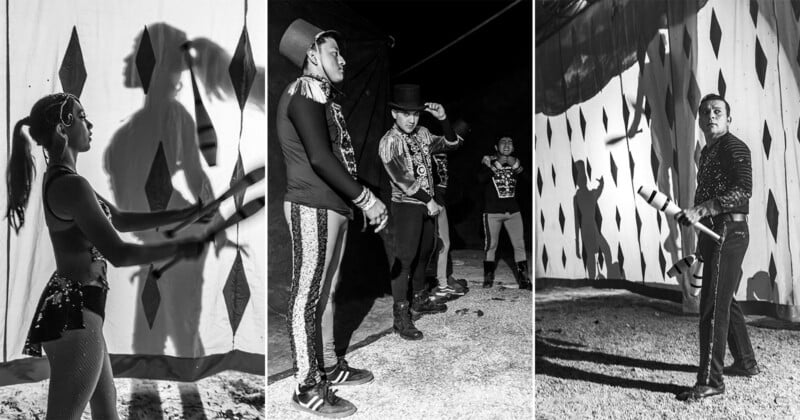
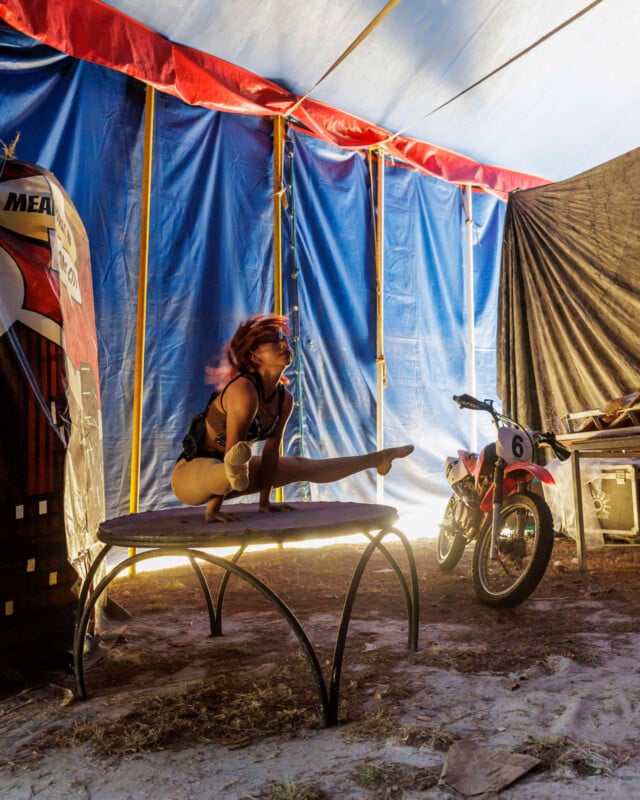
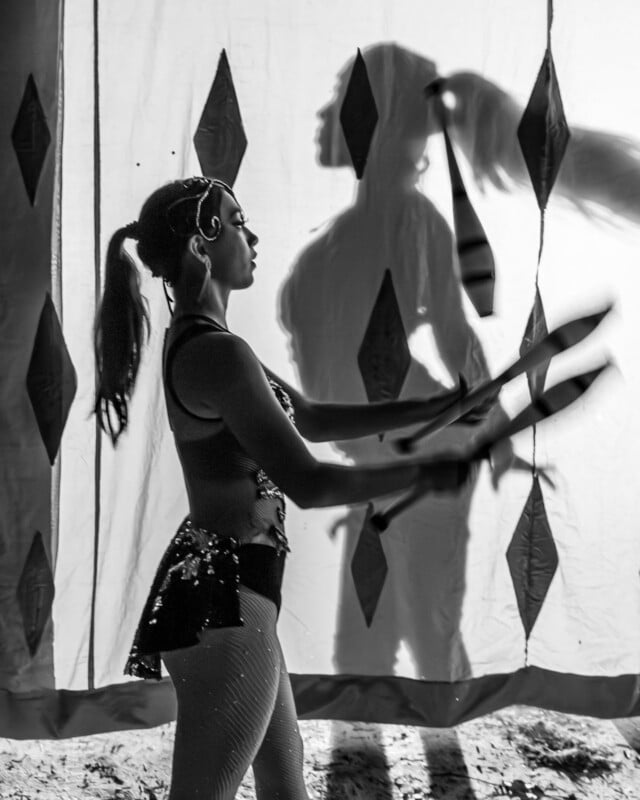
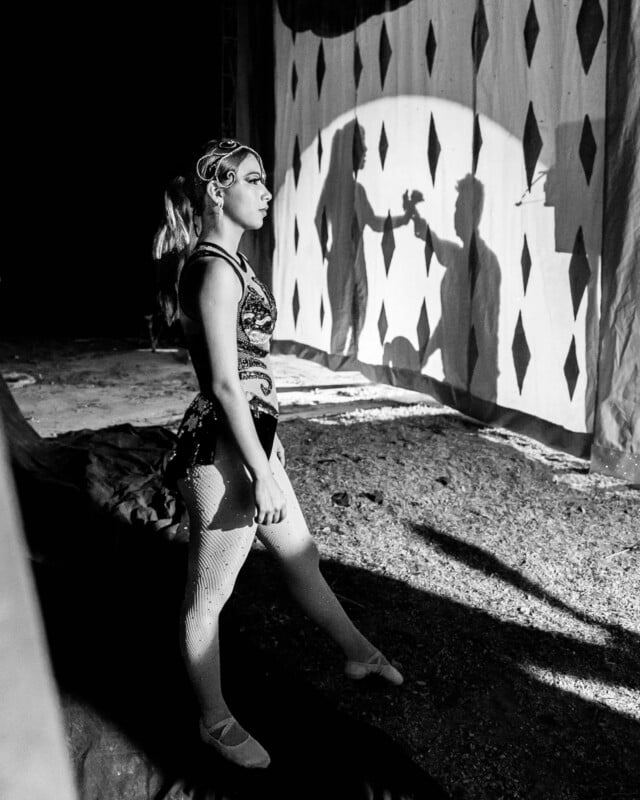
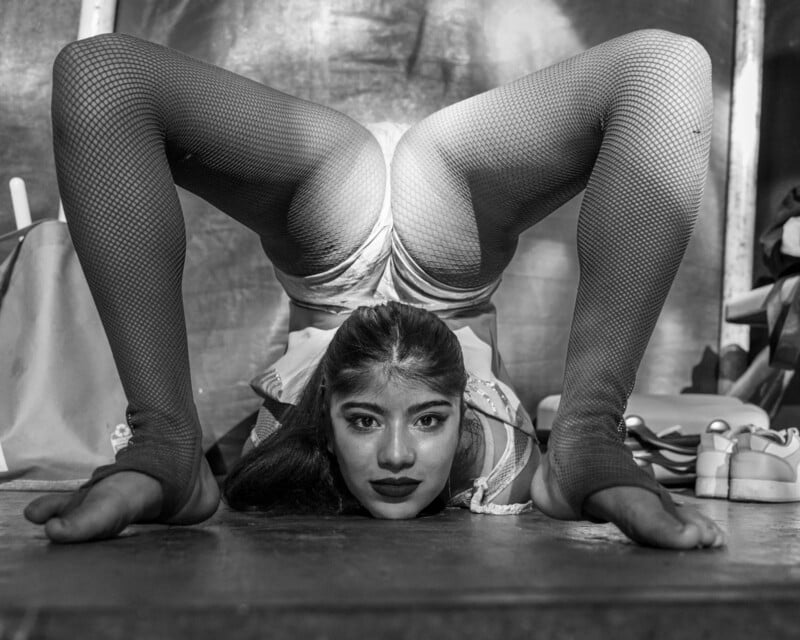
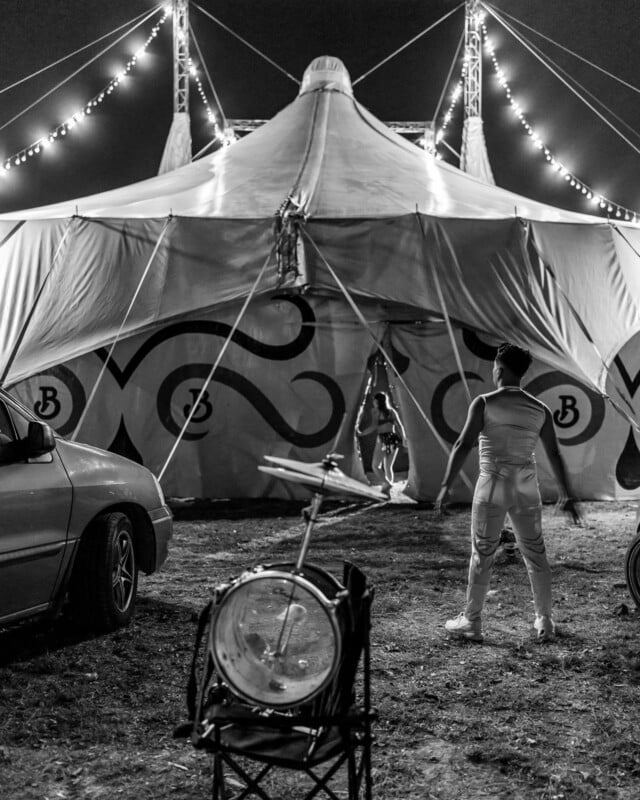
I recently photographed behind the scenes at a traveling circus in Mexico. Over the course of five shows, a lot of things went wrong. The first night I ended up setting the wrong exposure compensation and most of the shadows plunged into unrecoverable darkness, ruining all but a few photos. On the second night, the venue suffered a power outage, leaving the circus itself in total darkness.
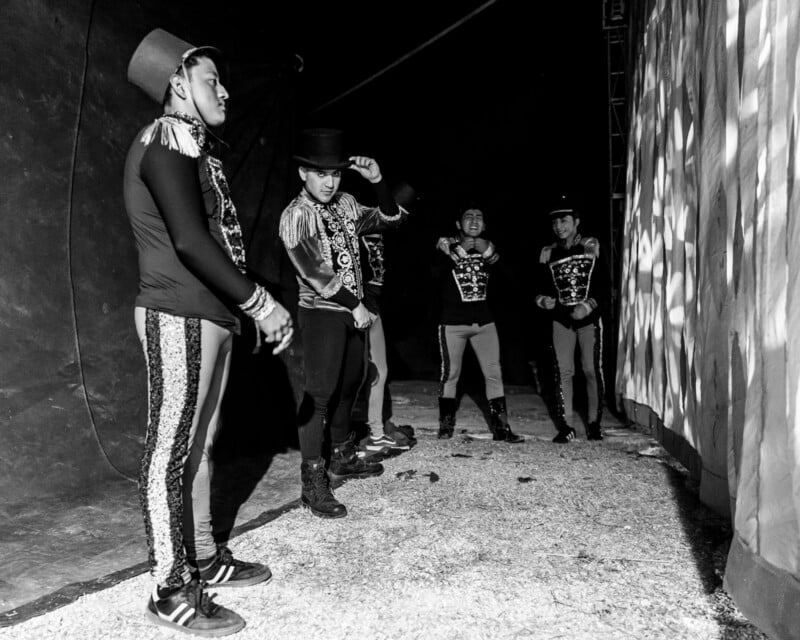
On the third day, I attended the afternoon and evening shows. In both cases, the photography gods blessed me and everything went well. I went through difficult lights and shadows and came back with a frame that I felt was valuable. I felt proud. I felt like a master of my craft.
And then came the last night.
The circus moved to a different location and used a smaller tent that lacked some of the interesting backdrop of the previous tent. The main actors have left for other cities. This troupe was poorly practiced and lacked the interpersonal chemistry of the regulars. The connection, the energy, and the aesthetic were off. Still, I continued shooting for three hours, confident that I could force a good image into existence.
I went home with nearly 1000 frames, but only three of them were de facto winners. I felt depressed, angry and completely defeated.
As I read the morning pages the next day, the reality of media finally broke through my bruised self-esteem. If I were a painter, I could choose the size and material of the canvas, choose the brushes, buy the paint I need, direct the lighting, and have meticulous control over my subject matter. These artists enjoy stronger copyright control. Unforeseen circumstances may arise, but the chaos of an uncooperative world is not the direct cause of bad painting.
However, photographers operating in an unscripted world, regardless of their particular field of expertise, do not have this level of copyright control over their medium. As I wrote before, petapixel According to the article, we photographers are gatherers. Other than our physical presence, foot position, lens focal length, exposure triangle, and frame placement, we cannot force our environment to do our will. We cannot control the light, the physical appearance of the subject, the attractiveness of the background and foreground, or the ubiquitous presence of photobombers. Expecting authority to control an uncontrolled environment is arrogant at worst and delusional at best.
Historically, this art form has sought to obscure the truth behind the romantic concept of the “decisive moment,” the union of eye, heart, and spirit, made famous by Henri Cartier-Bresson. This is an attractive philosophy, but it conveniently ignores the mathematical impossibility of chance.
In “Diana and Nikon,” Janet Malcolm speaks directly to Cartier-Bresson, saying that his timing was actually indebted to Surrealism, a movement built on embracing “found objects” and random chance. Malcolm argued that playing the omnipotent writer was a sleight of hand, pointing out that “the photographer’s most important tool is not the camera but the accident.” She observed that even great people are bound to the whims of chance, and pointed out that cameras routinely defy the photographer’s intentions.
Alan Sekula, in his critique of the meaning of photography, argued that elevating the street photographer to the status of a solitary, dominant genius is a “romantic fiction”. This is an invention aimed at elevating the medium to the status of painting, a fiction that conveniently ignores how photographers in uncontrolled environments remain trapped in the spontaneity of their subjects.
When we remove the romance, photographers working in these chaotic spaces are not adjusting the world. They just put up with it. When Garry Winogrand died, he left behind approximately 300,000 unedited exposures and 2,500 unprocessed films. His archives testify to the stoic reality of the streets. To find dozens of masterpieces, he had to process well over half a million failed attempts.
Years later, photography curator John Szarkowski openly confessed the mathematical absurdity of Winogrand’s later work. Szarkowski wrote in Figments from the Real World that Winogrand’s camera essentially became a “shoot in the air” machine, as its accuracy dropped to almost zero relative to the amount of exposure.
Critic Geoff Dyer elaborated on this vulnerability in “The Oncoming Moment,” arguing that Winogrand does not constitute a frame in the traditional sense. He resigned himself to probability and photographed simply “to see what it looked like in the picture.” Some contemporary critics have sought to salvage Winogrand’s later work by framing it as a deliberate experiment in pushing the limits of visual chaos. But peel back the gloss and the simple truth becomes clear: the experiment was a failure. It amounted to an analogue act of “spray and pray,” an ultimate surrender of authorship to the possibility of coincidence.
Some artists recognize this mathematical absurdity and simply refuse to bet on the odds. Jeff Wall started his career in the traditional documentary style, but eventually abandoned the unpredictable streets. Frustrated by the high failure rate of his image search, Wall turned to what he called “cinematography.” In the essay “Traces of Indifference,” Wall rejected the documentary tradition, explaining, “I wanted to compose…I realized I couldn’t be a photographer in the traditional sense. I had to construct.” He now builds elaborate sets, controls the weather with rainfall devices, hires actors, and demands control by the authority of a classical painter.
Similarly, Philippe-Lorca diCorcia, tired of the uncooperative nature of the world, decided to force the studios onto the streets. For our Heads series, we installed strobe lights on scaffolding in Times Square and directed the precise lighting of random pedestrians. Di Corcia openly admitted his frustration with chance, stating that his desire was to “control the uncontrollable” and impose a predetermined, artificial structure on a chaotic environment.
Wall and DiCorcia refused to rely on probability. Tired of exploring in the dark, they effectively built their own street lights.
This is a direct reference to the classic psychological joke known as the “drunk search.” A police officer found a drunk man crawling on all fours under a streetlight.
“What are you doing?” the police officer asks.
“I’m looking for my keys,” the man answered.
They search together for a few minutes. Finally, the policeman asks, “Are you sure you lost it here?”
“No,” the man says. “I dropped it around the corner in a dark alley.”
Incredulous, the officer asks, “Then why are you looking here?”
“Because,” answered the drunkard, “the light is better here.”
The studio is a streetlight. It’s safe, the light is perfect, and the variables are greatly reduced. But as documentary photographers, we choose dark alleys. We know the environment is dangerous, the light is unstable, and the chances of finding anything are low. We look there anyway because we know that the raw, unvarnished reward we’re looking for doesn’t exist beneath the safe glow of the lamp.
Aristotle provides the perfect framework for this idea in his Nicomachean Ethics. He distinguishes true courage from mere recklessness. A fool who rushes into a burning building without knowing the heat has no courage. he’s just a fool. True courage requires a thorough understanding of risk. It is the act of facing the possibility of pain, failure, and defeat and choosing to move forward anyway because the purpose is noble.
Going out to photograph the world is an Aristotelian act of courage. In The Beauty of Photography, Robert Adams argues that the fundamental mission of the photographer is to confront the uncooperative chaos of the physical world and to “wrest” momentary order from it. Adams frames this pursuit not simply as a technical exercise, but as a moral act of perseverance, a refusal to give in to despair despite the possibility of failure.
We don’t make jewelry. We are those who tenaciously search for coincidences while sifting through chaos. We intellectually understand how impossible it is to force the world into a perfect framework. I know I’ll probably go back empty-handed. But that reward, the singular and impossible framework that the universe arranges in our favor, outweighs the certainty of our frustration.
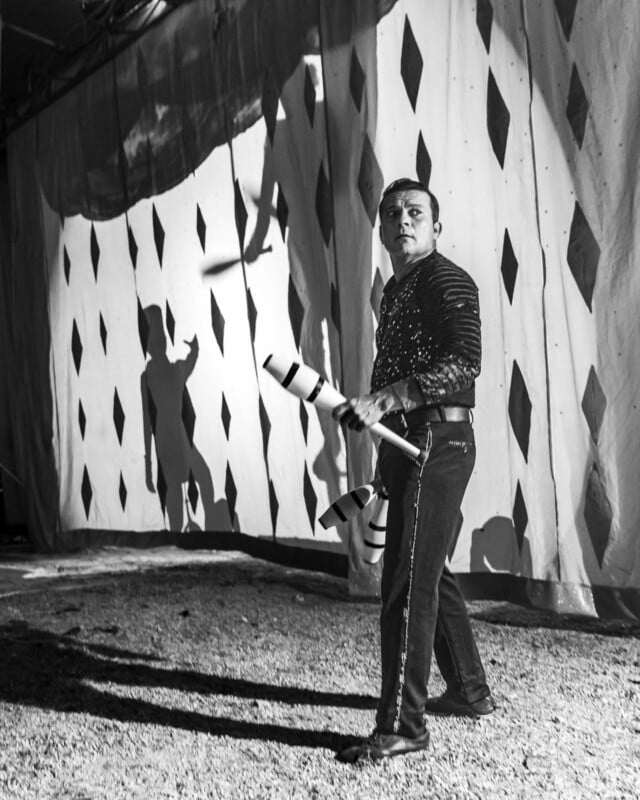
My photos from the last night of the circus were terrible. The river dried up and I returned empty-handed. But instead of lamenting the frames that didn’t work, I decided to celebrate the few that did and my courage to go out and do my best on the dirt floor of my tent. I have mastered the things I can control in a world I cannot control.
And tomorrow I’ll go out again, because this isn’t a studio. this is life. The only thing a true gatherer can control is their determination to step back into the chaos. We choose to master musical instruments, accept the impossible mathematics of the world, and simply pursue coincidence.
About the author: David MM Taffet is an award-winning photographer and the official photographer of the Institute of Identification Culture in Merida, Mexico. With a background in law and corporate restructuring, David has spent decades exploring the ethics of engagement, photographing in 54 countries. David advocates “gathering” rather than hunting in order to restore humanity to photography. David’s work can be found at www.invisibleman.photography and @invisiblemanphotography on Instagram.
Image credits: David MM Taffet
The opinions expressed in this article are solely those of the author.
#Making #peace #cruel #mathematics #photography