When German artist Kathe Kollwitz was asked about her art-making practice after her children grew up and left home, she replied, “I work like a cow grazes.”
It didn’t mean she was relaxed, content, and experiencing newfound creative freedom. What she meant was that her job was being affected by the lack of childcare needs. The hours were getting longer, and her art-making was similarly uninhibited and less urgent.
Having just brought my youngest daughter to adulthood, I, like Kollwitz, feel that all I can do is graze. The accumulated fatigue of 28 years of motherhood remains in my bones. I was more creatively productive when my children were younger and I needed to squeeze my writing into the cracks of their lives.
Perhaps there are elements in the nature of motherhood itself that encourage creativity?
Mother is a collaboration between Sophie Gerhardt, Curator of Australian and Indigenous Art, and Katharina Prugger, Curator of Contemporary Art at the National Gallery of Victoria. The couple have young children and Ms. Prugger is pregnant with their second child, but it was through their shared experience of motherhood that they came together to delve into the NGV collection and purchase important works for this exhibition of more than 200 works. We were both in the midst of early parenting, and when we looked for a word to describe our experience, we came up with the word “relentless.”
This is an explanation that most mothers recognize.
Mother begins with the Virgin Mary, the archetypal image of motherhood (and maternal guilt) in Western art and culture. Unblemished and above reproach, she represents the “first perfect mother” for many women, but no one will come close to her. However, other than the occasional exposed breast, little is known about Mary’s actual experiences as a mother. I can’t help but wonder if Mary had been more of a thinking, breathing, living human being rather than an idol, whether different values would have been at work in the Western world.
Gerhardt and Prugger provide a framework to explain this disconnect. Above the Virgin are hung three maternity skirts knitted by Elisabeth Jutala. This is worn to protect the mother and baby during labor, and is a testament to the blood, sweat, and chaos of childbirth. Elsewhere, in Rosselli’s 15th-century Mother and Child with Three Angels, the tempera is so eroded that the outlines of the mother and child are barely visible, still faintly shimmering, but also somehow empty.
Mothers consider erasing and rendering invisible the labor of motherhood, whether performed by mothers themselves or by paid agents. Gerhardt and Prugger include a strikingly confident sketch by Queen Victoria of the infant Princess Victoria, the face of the nurse holding her covered in voluptuous cheeks, presumably providing most of her motherly needs. A series of photographs from the 19th century shows infants propped up and neatly dressed. Camouflaged in the background is an invisible mother holding her children steady during the long exposure.
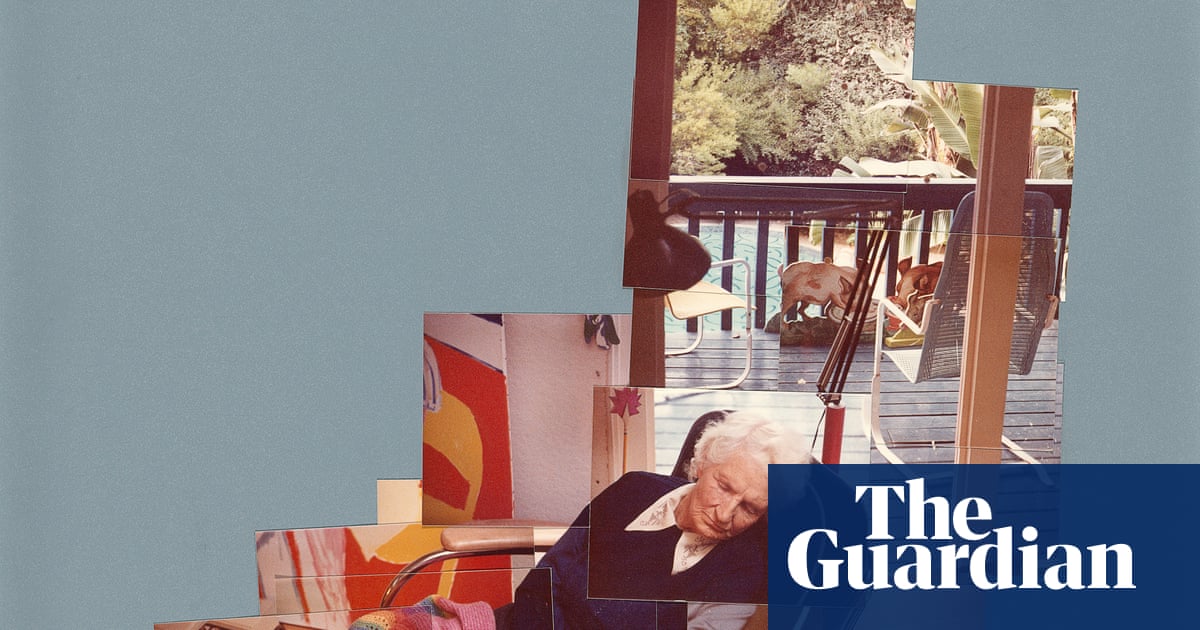
If there is a clue to motherhood that transcends culture and experience, it may be crystallized in these words. labor. The exhibition makes visible different aspects of this birth, from Christine Godden’s 1970s photographic documentation of the various stages of home birth, to Davida Allen’s 1989 baby, where it is unclear whether the mother is reaching over the dinner table to feed her child or choking. And what is most indelible for me is the presence of labor pains in the image of a mother sleeping at rest, tangled in her child’s limbs. I had forgotten the bliss and abandonment of a mother’s rest – a rest made sweeter by the exhaustion that preceded it.
Motherhood requires many repetitions, but this exhibition shows that repetition is not the enemy of creativity. Here are works that reflect the repetitive task of motherhood and the intergenerational transmission of repetitive skills. Kate Just’s Armor of Hope was made for her adopted two-year-old son and is woven from metal and silk. Each stitch is a repeat of the previous stitch, but together they form a declaration of love and protection. In One Continuous String (2021), Indigenous artist Kayla Manktelow recreates her mother’s history, using traditional textiles to recreate the dress her mother was forced to wear on her mission to Mungarba.
In Dhatam (2023), Gurwi Mlinnina re-envisions the detailed approach of her mother, Maralba Gumana, with thousands of small linear gestures. Repetition is slow and patient, painstaking and painstaking, but it still accumulates. The many tiny stitches that make up clothing are synonymous with the many tiny stitches that make up a human being.
Gerhard and Prugger divided mothers into three broad categories: creating, giving, and leaving. There’s loss (an entire room is given over to miscarriage and infant loss), joy (see Patricia Piccinini’s glittering golden nest, part cow and calf, part bike), and humor (Tara Madani’s image of a nursing mother spraying breast milk on a naughty man). Queenie Mackenzie’s Blackfellows of the Bush Country (1987) also features maternal subterfuge, referring to her mother’s habit of applying charcoal to her face as a child to prevent it from peeling off.
On my way out, the last section of the exhibition gave me the impression of loss and hope.
My long-legged 18-year-old daughter climbs into my bed when she’s tired or sick, just like she did when she was little. But our bodies can no longer be abandoned in the same way as each other. We’re not very natural and a little awkward. This is sad, but necessary, and totally okay. Separation and interdependence, which are also part of motherhood, are natural. In motherhood’s cycles of consumption and rebirth, repetition and accumulation, abandonment (though never fully completed) is itself a creative act.
#Relentless #National #Gallery #Victoria #exhibition #celebrates #motherhood