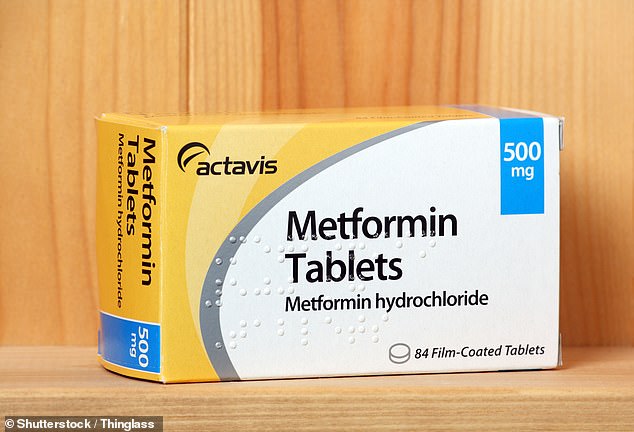
Prescription tablets, already available on the NHS, could help manage weight and protect the heart, even in inactive people, and mimic the benefits of exercise.
Metformin, which is taken by nearly three million people with type 2 diabetes and costs just 2p per pill, has previously been linked to a reduced risk of cancer.
And leading scientists now believe it may also increase levels of molecules released during exercise, which may help control blood sugar levels and promote cardiovascular health in people who can’t stay active.
A study by researchers at the University of Miami Miller School of Medicine, published in the journal EMBO Molecular Medicine, looked at the drug’s effectiveness in 29 men diagnosed with prostate cancer.
“From a clinical perspective, it was shocking to see metabolic signals that mirror what we associate with intense exercise,” said lead author and medical oncologist Dr. Marijo Bilsic.
“This type of effect could be particularly meaningful for patients whose physical activity is limited by treatment or symptoms.”
The researchers analyzed blood samples to determine how the pill affected N-lactoylphenylalanine (Lac-Phe), a molecule produced in the body during exercise.
Lac-fe is known to increase rapidly after intense physical activity and is also associated with appetite suppression and weight loss.
Metformin mimics the beneficial effects of exercise and could offer hope to thousands of patients, a surprising new study finds
The researchers found that while metformin did not appear to be effective in treating prostate cancer itself, it did increase Lac-Phe levels in patients without the need for actual exercise.
This opens the door to further research into the drug’s potential, especially for cancer patients who often experience fatigue that limits their ability to train.
“Metabolism is involved in all cellular activities,” said David Lombardo, a Sylvester researcher and professor of pathology and laboratory medicine in the Miller School.
“These findings suggest that Lac-Phe may be a very useful signal for understanding how metformin affects metabolism in prostate cancer patients.”
Dr. Bilsich added, “Although these results are not a new cancer biomarker, they provide a clearer understanding of how a widely used drug supports metabolic health during prostate cancer treatment, an important outcome for patients and clinicians alike.”
The research team said more research was needed on the topic, but the findings were a “reminder that cancer treatment is not just about targeting tumors.”
“Even if there is no direct change in tumor growth, supporting metabolic health can impact how patients tolerate treatment and how they feel over time,” said Priyamvada Rai, professor of radiation oncology at the Miller School.
“This study provided an opportunity to investigate molecular pathways that can be therapeutically activated for better outcomes in treatments that induce metabolic stress.”
Previous research has linked metformin to a reduced risk of esophageal cancer and suggests that the drug may also help prevent prostate cancer.
It is usually prescribed for diabetes when diet and exercise alone are not enough to control blood sugar levels.
The NHS says metformin is also used to improve fertility in women with polycystic ovary syndrome. Polycystic ovary syndrome can cause irregular menstrual periods, enlarged ovaries, and excess male hormones, which can lead to the development of facial hair.
Research suggests that it may slow the growth of cancer cells, and it is attracting attention as a potential drug to fight cancer.
This pill lowers levels of insulin, a hormone that helps malignant cells grow.
#Common #cheap #drug #millions #mimics #strenuous #exercise #study #finds #people