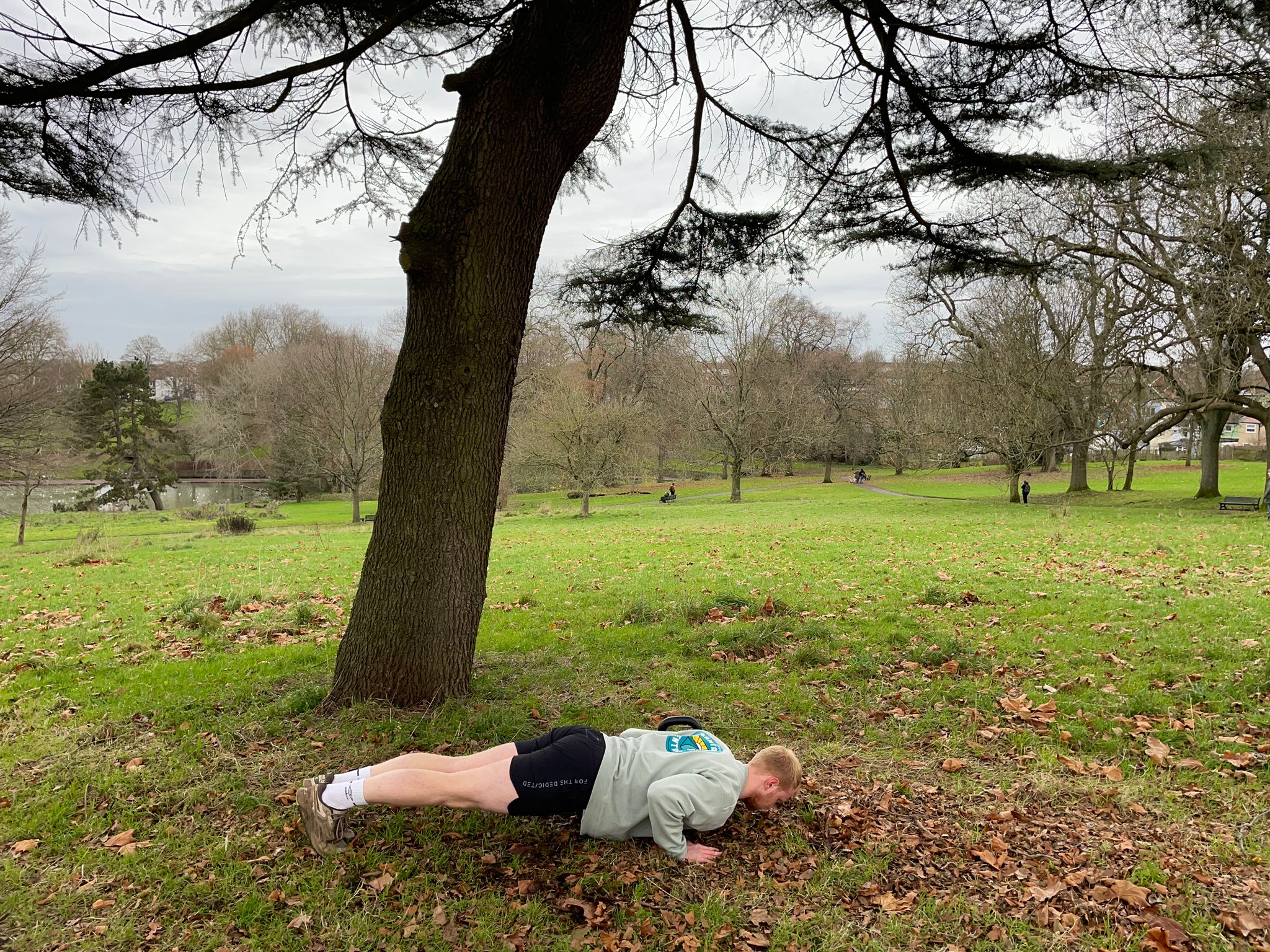
TThe internet is full of fitness advice. Much of the content is quite similar. Walk 10,000 steps a day, engage in regular strength training sessions, and hit your daily protein intake. These are all solid guidelines to follow.
But there’s another fitness habit that’s often overlooked. This can completely change your exercise efforts for the better. It’s about getting out and spending time with other people.
“I started weightlifting in 1965 and coaching in 1979,” Dan John, an experienced strength coach, tells me. “When you’re training outside, people start to gravitate toward you. If you go to the park every Saturday at 9 a.m. and invite your friends, your friends will invite their friends, and you’ll quickly build an intentional community.”
The benefits of these joint workouts go far beyond burning calories. Not only does fellow exercisers hold you accountable for your own fitness efforts, but in a world where personal interaction is more optional than ever, group training also provides a fun social hit.
Professor Andrea Wigfield, a leading expert on social isolation, compares loneliness to hunger and thirst: “Social interaction is essential, and as humans, we need people around us.” In my experience, people who train in groups are much more likely to be fully satisfied.
Even when you’re up against elements of the British temperament, outdoor fitness has plenty of physical benefits. John explains each below and also shares a kettlebell workout to help you get started.
Outdoor Kettlebell Training Offers Countless Benefits for Mind and Body
For your first outdoor workout, John suggests picking up a kettlebell and doing a session he calls a “coyote.” The name comes from Coyote Point, a location in California where John created and shared his sessions with friends.
Complete the sequence below for 5-20 rounds.
John says this workout trains the entire body and covers basic human movements. These include squatting, hinging at the hips, pushing, pulling, and carrying.
Beginners can start with 5 rounds and increase to 20 rounds as their fitness increases. The goal is to perform each exercise with proper technique, rest only when necessary, and move smoothly throughout the workout.
To make the session easier, you can swap push-ups for kneeling push-ups. If you want to make your training harder, John suggests first increasing the number of push-ups each round, and if you want an extra challenge, increase the kettlebell weight.
read more: Expert trainers list 3 essential exercises for a stronger, more mobile body
Many benefits of outdoor training
Training starts early
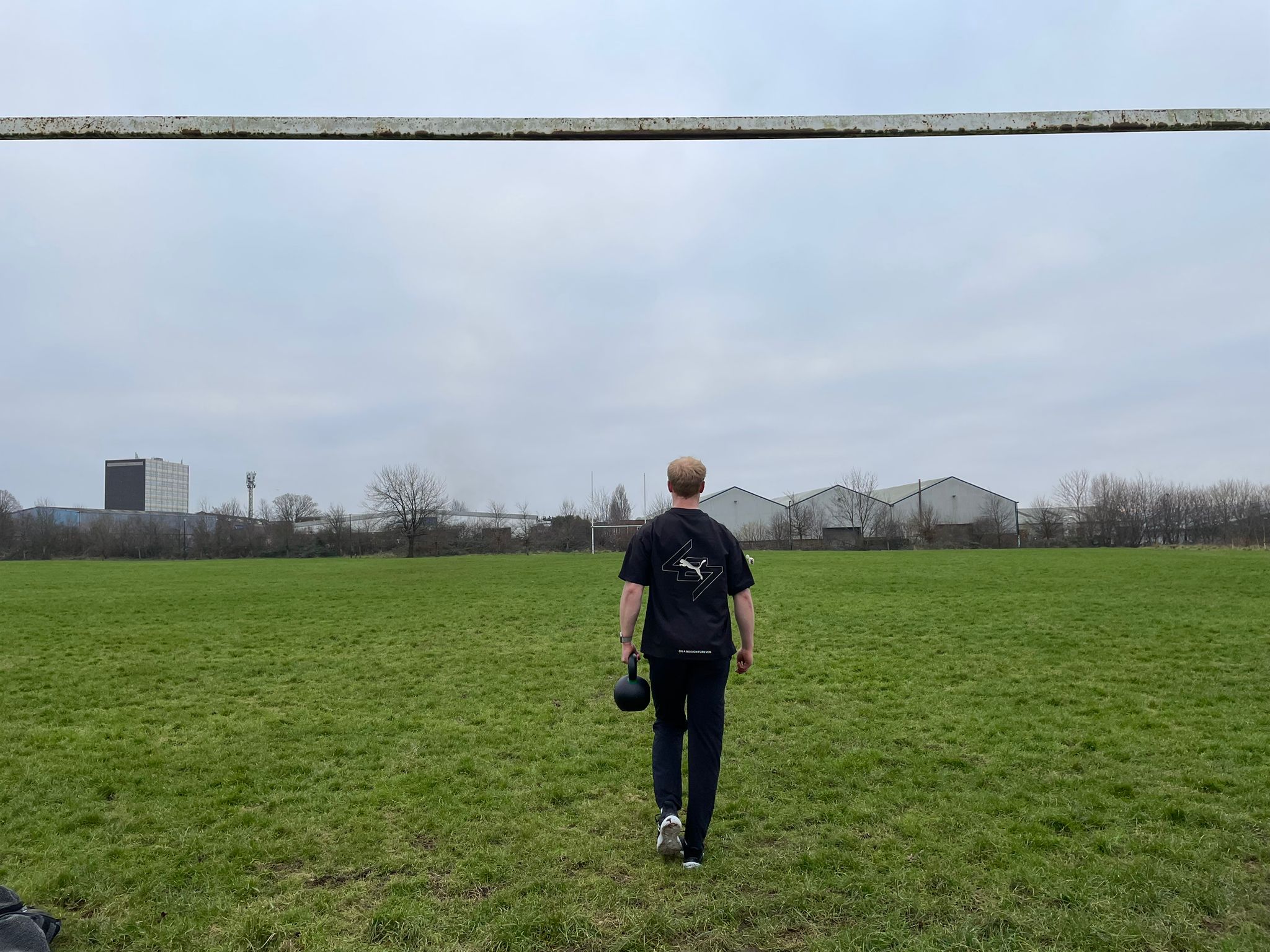
Most strength training begins after you step into the gym, but that’s not the case when you exercise outdoors. Training begins the moment you start transporting your kit from your home or car to your chosen training location.
“I’ve been telling people for years that the secret to park training is that you have to park your car, then take your four kettlebells out to the field, and then bring them back again at the end. There’s loading and carrying,” John says.
“When we were training at Coyote Point, there were Canada geese relieving themselves everywhere, so we had to look around to find the spot with the least amount of goose droppings, which often added up to 400 meters.”
“Then I had to put down the kettlebell and go back to the car to get my exercise mat, towel, and water. All of a sudden, I had run a quarter-mile in a loaded carry and walked a half-mile before my first lift.”I also warmed up really well.
read more: Stop overthinking exercise – these 6 simple habits will improve your health
Adaptation is essential
Adaptation is the driving force behind all movement. We exercise because we want our mind and body to adapt in some way, such as to gain muscle, lose fat, improve heart and lung function, or lift our mood.
Adaptation of the human body requires new challenges. And, as John points out, outdoor training provides plenty of those.
“Training outdoors makes you more like a jazz performer,” he says. “Maybe the ground is wet and you can’t do as much groundwork as a Turkish warm-up. Maybe it’s unseasonably hot. Maybe you’re robbed of your usual spot at a family picnic. You have to adapt,” he says.
“I think unexpected adaptations make for great training programs. Every good idea I’ve ever had as a coach came from not having access to perfect conditions and not being able to adapt.”
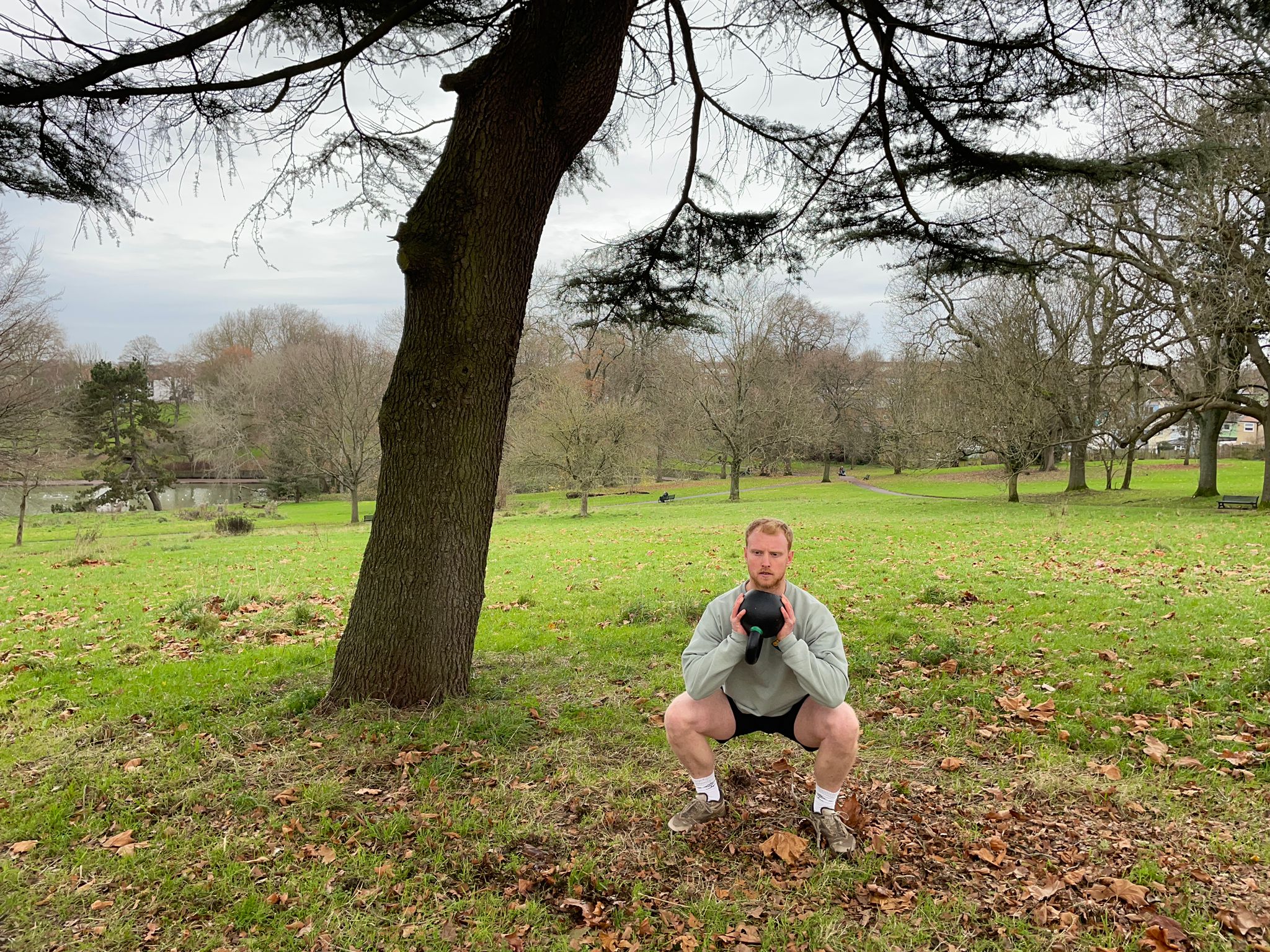
In response to the needs of his classes and available equipment, John invented the goblet squat, which is now a staple in many strength and conditioning programs.
He realized the benefits of a one-sided carry while lugging his daughters’ bags around on holiday, and created a suitcase carry that carries the weight in one hand, like a suitcase.
“Training outdoors has built-in adaptations,” John tells me. “The great thing is, on your way to the park, you still don’t know what’s going to happen. You don’t have a battle plan after the first bullet, and as a coach, you don’t have a plan until the first comment comes out of someone’s mouth.”
When training outdoors, plans change, green exercisers have to try something new, and experienced gym-goers may relearn a thing or two by scaling back from bench presses to press-ups. And ultimately, everyone benefits from the challenges at hand.
“Also, I don’t know how many calories you burn by not getting gnats on your face, but it’s not zero, so that’s another benefit,” John added with a laugh.
read more: Tried training with one of the fittest women in the world, but the results weren’t great

community
I spoke with Dan on Monday morning. Our call ends at 9:25 a.m. as a bunch of people arrive at their homes in Utah and get ready for training.
“Five days a week, I open my garage and people come to train with me,” he says. “It’s free, and people come from all over the world.
“So you might say, ‘Dan, you’re training very disciplined every day at 9:30 a.m.’ But the reality is, I’m not. I train every day because people show up and show their enthusiasm. I’m training with their free will. I already have the equipment and the knowledge and I’m ready to work out. So when they show up, I train with them.”
John calls this process “intentional community building.” That is, a group of people who hold each other accountable, outsource motivation when necessary, and enjoy each other’s company.
His bonus tip for building a tight-knit group is to go out to dinner every now and then.
“When we lived in California, we always went to a little cafe called Pete’s right off the highway,” says John. “Obviously you try to go somewhere where there’s reasonably healthy food, but then you just sit down and eat. By the time everyone has food in their bellies, the conversation turns to next week and how we can make things better. It’s become normal for people not to worry about training.”
read more: I tried Harry Styles’ workout – I’m not surprised by his incredible Berlin Marathon time
Spending more time in nature makes you feel better
You don’t need to cite research to show that spending time outdoors, surrounded by trees and other greenery, is likely to benefit your mental and physical health.
There are many studies to choose from. For example, Loughborough University reports that spending just 15 minutes in nature can improve your health. It’s been linked to everything from improved mood and concentration to lower blood pressure and resting heart rate.
However, the average Brit spends just 7 per cent of their time outside during working weekdays. If you can train outdoors, this number increases dramatically. Subjectively, it’s quite fun.
“When you’re doing exercises on your back, you start noticing something interesting,” says John. “I’m training with people outside, so now everyone’s talking about squirrels. I also have a hummingbird feeder in the garden, and the people training there start noticing the hummingbirds.
“It’s not that the hummingbirds weren’t there, they just suddenly appeared. They’ve always been there, but now you go out and you start noticing things. I think that’s very healthy in a generation that’s always with their heads down on their phones.”
read more: Longevity experts say this diet is more effective than Ozempic in transforming the human body
#people #workouts #benefit