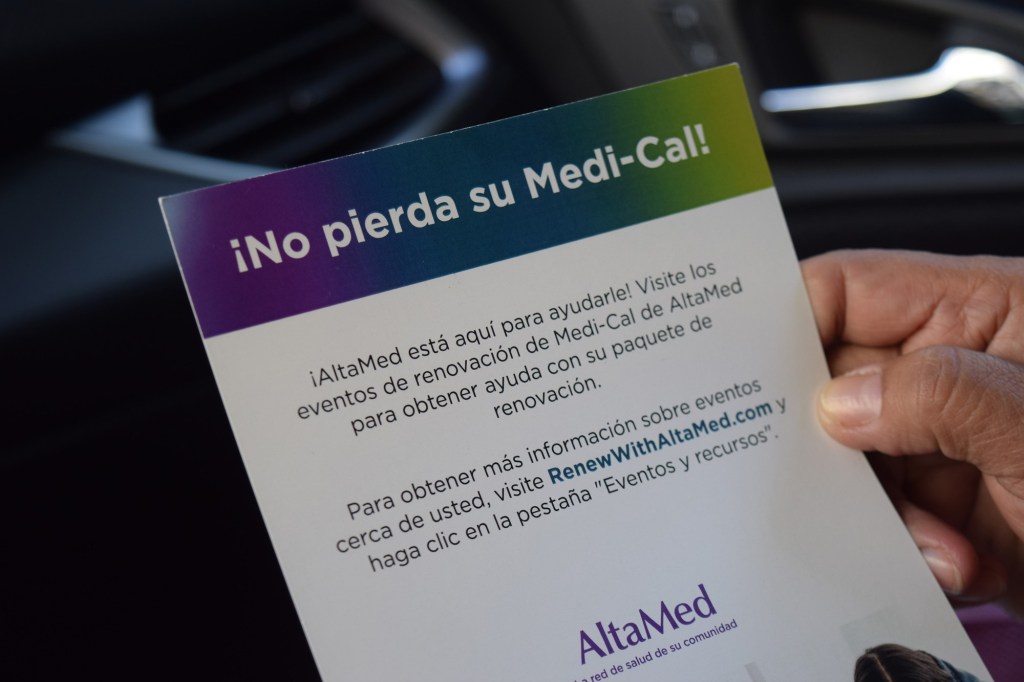
As many as 16 million low-income Americans are projected to lose federally funded health insurance over the next two years. That’s largely due to work requirements and immigration-focused rule changes to Medicaid, the program known in California as Medi-Cal.
Even if those projections (such as those by the Congressional Budget Office) turn out to be low, it would still be the largest increase in the number of uninsured people in the United States since the Affordable Care Act took full effect more than a dozen years ago. Before the ACA, approximately 18.2% of all Americans did not have health insurance. By the end of last year, this number had fallen to about 8.5%.
Now, that trajectory is expected to change. And experts say the coming uninsured surge will have a ripple effect, affecting those directly affected by the loss of insurance and indirectly nearly everyone else.
The first of these is a marked decline in public health. People without health insurance seek less preventive care, get sick more often, and die younger than people with insurance.
But experts and government officials predict another outcome, numbers that will affect wallets.
Although a smaller Medicaid program is planned as a result of last year’s “Big and Beautiful” tax and spending bill (House Resolution 1), and the smaller version of that program is expected to generate nearly $1 trillion in federal spending by 2034, the broader economic effects are not yet clear.
The additional impact of adding millions of newly uninsured people to the economy, both nationally and in Southern California, is difficult to quantify but easy to label as “costly.”
For example, uninsured people still get sick and injured, and therefore need and receive care in hospitals and emergency rooms, which are typically the most expensive parts of the health care system. The cost of that treatment is borne by states, hospitals, insurance companies, and ultimately by insurance customers.
The Congressional Budget Office estimates that the cost of uncompensated care in states could explode, reaching $36 billion nationwide and about $4.1 billion in California. (Other reports have suggested that the uncovered costs for insurers, and their customers, would be much higher.)
For some non-economists who understand health insurance only as customers, the possibility that the HR1 rule changes will not pay off is frustrating.
“I think we had this discussion a few years ago when everyone was fighting about Obamacare,” said Jackson Tartable, an aerospace consultant who lives in Laguna Niguel. “I thought we all agreed that it was cheaper to insure (people) than to leave them uninsured.”
“All I can say is that I would be (furious) if my insurance bill went up significantly because some people don’t like immigrants and they want to kick people off Medicaid,” he added.
Approximately 1.7 million local residents
Predictions about how HR1’s changes to federal health insurance for low-income people will play out in Southern California paint a potentially bleak picture.
About 1 million people in Orange County currently qualify for Medi-Cal, and as many as 249,000 of them could lose their plans over the next two years, according to a study released earlier this year by the UCLA Center for Health Policy Research and the UC Berkeley Labor Center. The study predicts that by 2028, the number of newly uninsured people could increase by 1.1 million in Los Angeles County, 189,000 in Riverside County, and 177,000 in San Bernardino County.
These estimates are based on new work requirements and immigration rules that HR1 mandates for Medicaid, as well as other planned changes to Medi-Cal that are being imposed by states. As a result, there will be a mass exodus. Forecasters at UCLA and Berkeley predict that about 3 million Californians will leave Medi-Cal over the next 24 to 32 months.
County officials who locally administer federal health insurance haven’t yet been too specific.
They said federal and state officials are still finalizing the details of new federal health insurance rules, so they can only say that about 330,000 people in the county will likely be affected by these rules, many of whom could end up without coverage.
“Until we have complete clarity on the exemptions granted by the state, we cannot predict specific numbers,” said Mike Edmundson, director of Orange County Assistance Programs. This department helps determine who is eligible for Medi-Cal and who is not eligible for Medi-Cal. In Orange County, Medi-Cal is typically provided by the county’s CalOptima Health system or Kaiser Permanente.
“We can only predict that it will decrease.”
What is known, or at least widely agreed upon, is that losing insurance can be devastating.
For tens of thousands of local residents, regular health check-ups will no longer be routine. Tests for cancer and heart disease will be omitted. You will take fewer, if any, medications to manage or prevent diseases such as diabetes or blood clots.
There are no data points, but the new rules will affect so many people and take away so much health care that at least some of the newly uninsured will die.
And that drives up costs for everyone else.
Edmundson said people who lose insurance will go to hospitals and emergency rooms for treatment when they are acutely ill or injured, instead of seeking less expensive and usually more effective preventive care. He said the county and state have not yet issued formal financial projections for how much these visits will cost insured individuals and taxpayers, but the finances are being considered.
“It’s going to put a tax on the hospital system, and if people can’t pay their bills because they don’t have insurance, it’s going to have to be shifted somewhere.
“We understand there are significant concerns about the cost implications of these changes.”
Additionally, the new labor regulations apply to working-age adults between the ages of 19 and 64. If these people cannot meet these requirements (typically working at least 20 hours a week or volunteering or studying for a similar amount of time), removing them will add financial stress to the system.
“If individuals who are younger and presumably in better health than those who remain in the system lose coverage, there will be downstream effects,” Edmundson said.
“The cost of paying insurance premiums will rise.”
But that’s in the future, and it’s just one possibility. For now, counties and other Medi-Cal offices across the state are scrambling to see if they are ready to implement the new HR1 rule, but no date has been set yet. They are uploading the new rules to the automated welfare system computer systems throughout California.
And we are beginning to reach out to registrants who may be affected. People like Matteo Hernandez, a 32-year-old landscaper in Santa Ana, said he and his family have been receiving health insurance from Medi-Cal since the pandemic began.
“I’m worried about my wife,” Hernandez said.
“I have a green card. I’m fine. But she just has an (asylum) application, so I don’t know if she’s going to stay on insurance or what.”
“I’ve heard the kids are OK,” he added, referring to the children, ages 6, 9 and 11.
“But we don’t know what will happen if the new rules say (my wife) won’t be able to get insurance. She’s pretty healthy, but still…”
rule
Hernandez is understandably worried about his wife’s health insurance.
A key part of HR1’s new rules and recent changes by states is to keep various categories of immigrants away from federal health insurance.
California has traditionally offered insurance to all types of immigrants, but has already begun to comply with federal mandates. On Jan. 1, for example, the state suspended a program that allowed undocumented immigrants to receive Medi-Cal benefits. It’s unclear how many people were affected, but there were approximately 120,000 undocumented immigrants enrolled in Medi-Cal in Orange County.
The next important date is October 1st. On that date, the HR1 rule is expected to go into effect, kicking out people known as “lawfully existing noncitizens” from Medicaid, including immigrants seeking asylum or refugee status, former victims of human trafficking and violence, and others. Nationwide, millions of people could be affected. It’s unclear how many people will come from Southern California.
And starting sometime next year, work requirement rules similar to those set to begin in mid-June for recipients of California’s Supplemental Nutrition Assistance Program, known as CalFresh, will apply to Medi-Cal. Able-bodied people between the ages of 19 and 64, who do not have a disability or mental health problem, or who are caring for young children or elderly parents, must prove they have been working, volunteering or studying for at least 20 years. An estimated 330,000 people in Orange County are expected to fall into that world, many of whom are already working, Edmundson said.
Also, next year, all Medi-Cal enrollees will have to start reapplying for assistance every six months, instead of once a year as they do now. Edmundson said the change would make the county’s program more expensive to administer by doubling the workload without providing federal funding for new employees, while also reducing the number of people receiving assistance.
“You tend to lose people when you lose touch with them,” he says. “This is yet another opportunity to do just that.”
Other rules will take effect over the next two years, including requiring all but the lowest-income participants to pay $30 a month in premiums.
For people like Tartable, a consultant, who gets insurance through their jobs or through the federal marketplace, bills can be years away. But after that?
“We’re going to end up paying more,” Tartable said. “To be honest, I can’t say I understand all the details of what’s being discussed. But at least that much, we pay more, I totally understand.”
#uninsured #bomb #explode #reach #Orange #County